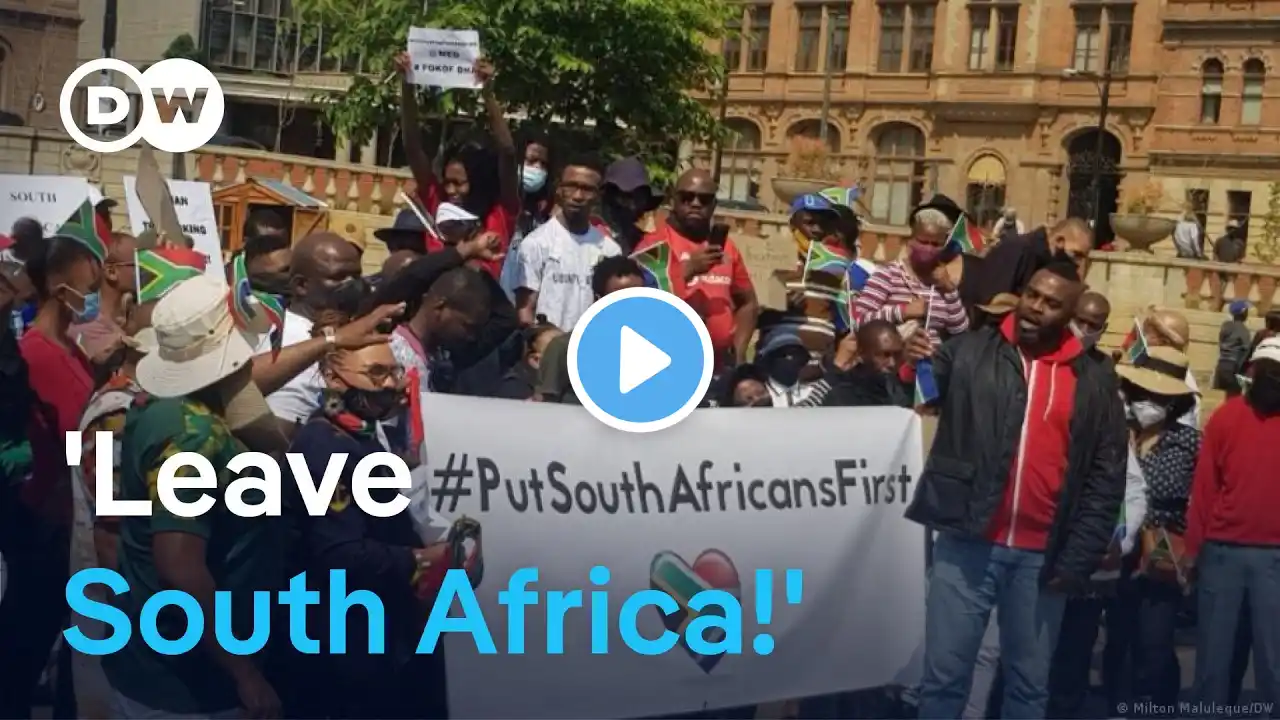
Immigrants Flee South African Violence
In South Africa, the resentment fueling this month’s anti-immigrant violence is spurring fearful foreign nationals to return to their neighboring countries. Roughly 400 Malawians boarded six buses and arrived this week in their homeland’s commercial capital, Blantyre, with eight more busloads expected in coming days. Hundreds of Zimbabweans are on the move, too, as are other African immigrants. South Africa’s chronic inequality and high unemployment levels mean there aren’t enough jobs to go around. Poor South Africans contend immigrants – primarily coming from other African nations – are taking their jobs and diminishing their economic prospects, sparking turmoil that began earlier this month in neighborhoods of Johanesburg and Durban. At least seven people have been killed in attacks on foreign-owned businesses, and thousands have been displaced. Though the violence has subsided, apprehensions remain. Nearly 130 humanitarian groups signed a letter asking the African Union's human rights arm to require that South Africa strengthen protections for immigrants. That would include establishing special courts for addressing attacks against immigrants and foreign-owned businesses, the Associated Press reported. "The solution to the violence should not be to repatriate all foreign nationals, but to ensure an environment ... in which their rights are protected," the letter said. Leaders of the Southern African Development Community’s 15 member countries are scheduled meet next week in Zimbabwe about better integrating immigrants and discouraging xenophobia. Zimbabwe President Robert Mugabe currently is chair of both the development community and the African Union. At an event last Saturday marking Zimbabwe’s 35th anniversary of independence, he called anti-foreigner attacks the work of "misguided" elements. South Africa’s government has condemned the violence and sent the military to assist police in Durban and Johannesburg hot spots. Malawi begins repatriation Meanwhile, the Malawi government this week began repatriating citizens after two were killed and 3,200 dislodged from their homes, Malawi Information Minister Kondwani Nankhumwa said. He added that many fled with just the clothes on their backs to enter safe camps in the two troubled South African cities. The Malawi government has set aside about $450,000 for the repatriation, Nankhumwa said, noting more funding may be needed. "Day by day, we discover that there are more Malawians" being displaced, he said. “For example, we started with 90 people, then 120 and then 360…. Now we are talking about 3,200. So, this is likely necessitating the rise of economic costs." On Tuesday, human rights groups in Malawi led protests in the capital of Lilongwe and petitioned the South African High Commissioner to Malawi to end attacks on foreigners within 24 hours. Xenophobic attacks first had erupted in 2008. Billy Mayaya, a human rights activist who led the protests, said he fears this latest outbreak will spoil the long relationship between Malawi and South Africa. "Malawians started migrating to South Africa in the 1800s, so this is a long relationship which has deep roots," he said. "… We don’t want these incidents to undermine that long-time relationship that we have had with South Africa." The Consumers Association of Malawi announced it would hold "Black Friday" vigils, during which Malawians boycott South African shops, goods and services to protest the xenophobic attacks. John Kapito, the group’s executive director, said South African shops should remain closed during these days "to avoid unnecessary incidents." Some Zimbabweans head home Economic strife has led an estimated 1 million Zimbabweans to resettle in South Africa. Last weekend, Mugabe expressed "our sense of shock, disgust" at the violence there and said his government was working on transportation to bring home endangered people.