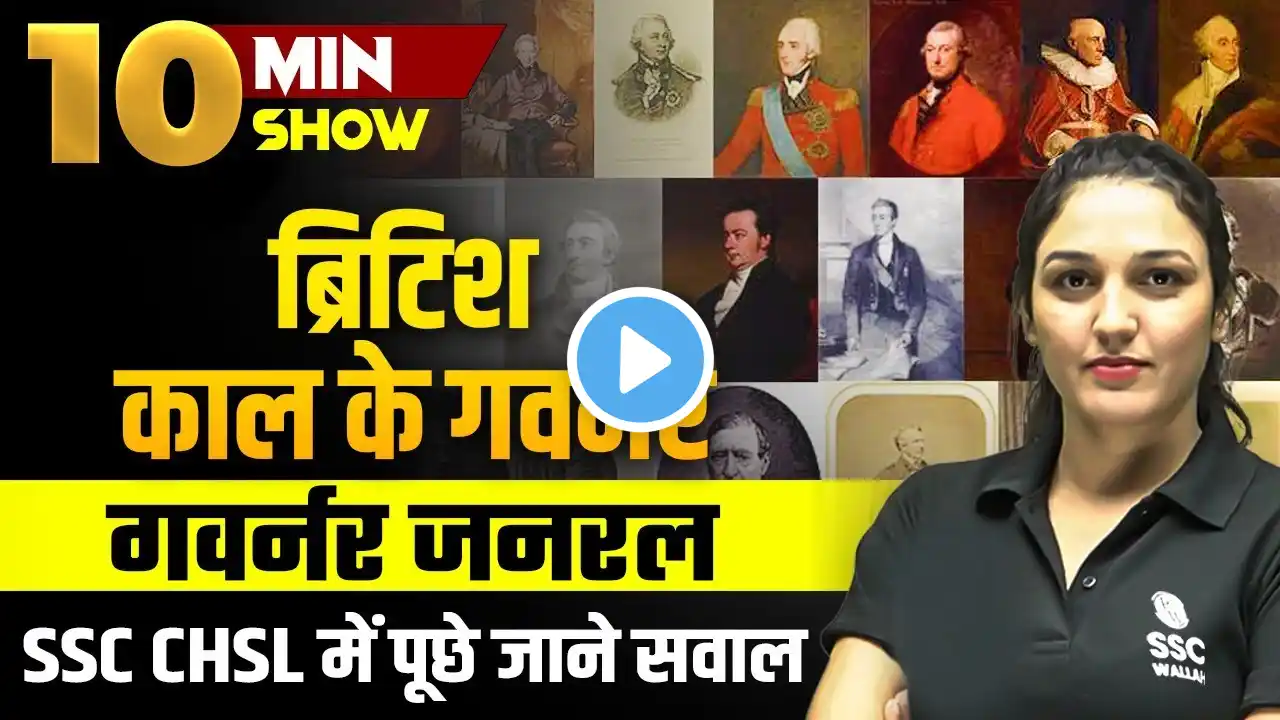
Governor General Of India |Governor General and Viceroy of India | Modern History Of India in Hindi
governor general of India | Governor general and viceroy of india Governor and Governor Generals Of Bengal First and Last Governor and Governor General भारत के गवर्नर और गवर्नर जनरल भारत के वायसराय बंगाल के गवर्नर और गवर्नर जनरल First and Last Governor of Fort William in Bengal #Governor&Viceroy #ModernIndiaHistory #Upsc #History360 Governor General and Viceroy History 360 East India Company received a Royal Charter from Queen Elizabeth I on 31 December 1600. Within a time period of nearly three centuries, the British turned from a trading power to one of the most powerful countries in the world. Even after being a small island country, Britain was able to establish one of the largest empires in the world. The extent of the empire can be depicted by the phrase that Britain was able to achieve this tremendous feat on the backdrop of the strong and efficient bureaucracy that it established in its colonies. In India, the British were able to establish this control through Governor-General & Viceroys. Governor-General of Bengal (1773-1833): When East India Company came to India, it controlled Bengal through a post named as "Governor of Bengal" (first Governor of Bengal: Sir Charles Eyre). Other Presidencies, Bombay and Madras, had their own Governor. However, after the passing of Regulating Act 1773, the post of Governor of Bengal was converted into "Governor-General of Bengal" (first Governor-General of Bengal was Warren Hastings). Through this Act Governor of Bombay and Madras worked under the Governor-General of Bengal. Governor-General of India (1833-58): By Charter Act of 1833, the post name of Governor-General of Bengal again converted into "Governor-General of India" (first Governor-General of India was William Bentinck. This post was mainly for administrative purposes and reported to the Court of Directors of the East India Company. Viceroy (1858-1947): After the revolt of 1857, the company rule was abolished and India came under the direct control of the British crown. Government of India Act 1858 passed which changed the name of post-Governor General of India by Viceroy of India. The Viceroy was appointed directly by the British government. The first Viceroy of India was Lord Canning. बंगाल का गवर्नर-जनरल (1773-1833): जब ईस्ट इंडिया कंपनी भारत आई तो उसने ‘बंगाल के गवर्नर’ (Governor of Bengal) पद के माध्यम से बंगाल पर अपना नियंत्रण स्थापित किया। बंगाल के पहले गवर्नर Sir Charles Eyre थे। अन्य प्रेसीडेंसी, बॉम्बे एवं मद्रास के पास अपने स्वयं के गवर्नर थे। हालाँकि रेगुलेटिंग एक्ट-1773 के पारित होने के बाद ‘बंगाल के गवर्नर’ पद का नाम बदलकर ‘बंगाल का गवर्नर-जनरल’ रख दिया गया। बंगाल के पहले गवर्नर-जनरल वारेन हेस्टिंग्स (Warren Hastings) थे। इस अधिनियम (रेगुलेटिंग एक्ट-1773) के माध्यम से बॉम्बे एवं मद्रास के गवर्नर ने बंगाल के गवर्नर-जनरल के अधीन कार्य किया। भारत का गवर्नर-जनरल (1833-58): चार्टर एक्ट 1833 द्वारा बंगाल के गवर्नर-जनरल (Governor-General of Bengal) का पदनाम पुनः बदलकर ‘भारत का गवर्नर-जनरल’ (Governor-General of India) कर दिया गया। भारत के पहले गवर्नर-जनरल विलियम बैंटिक (William Bentinck) थे। यह पद मुख्य रूप से प्रशासनिक उद्देश्यों के लिये था और इसे ईस्ट इंडिया कंपनी के कोर्ट ऑफ डायरेक्टर्स को रिपोर्ट करना था। वायसराय (1858-1947): वर्ष 1857 के विद्रोह के बाद कंपनी के शासन को समाप्त कर दिया गया और भारत ब्रिटिश ताज के सीधे नियंत्रण में आ गया। भारत सरकार अधिनियम 1858 (Government of India Act 1858) पारित हुआ जिसने भारत के गवर्नर जनरल का नाम बदलकर ‘भारत का वायसराय’ कर दिया। वायसराय को सीधे ब्रिटिश सरकार द्वारा नियुक्त किया गया था। भारत के पहले वायसराय लॉर्ड कैनिंग (Lord Canning) थे Modern India history video History video of Modern India Best video if modern india Aadhunik bharat ka itihas Bharat ka itihas History of modern india in hindi history of india in hindi modern history lectures in hindi history videos in hindi History videos for NET JRF History video for up pgt best video of modern history in hindi History videos for upsc in hindi