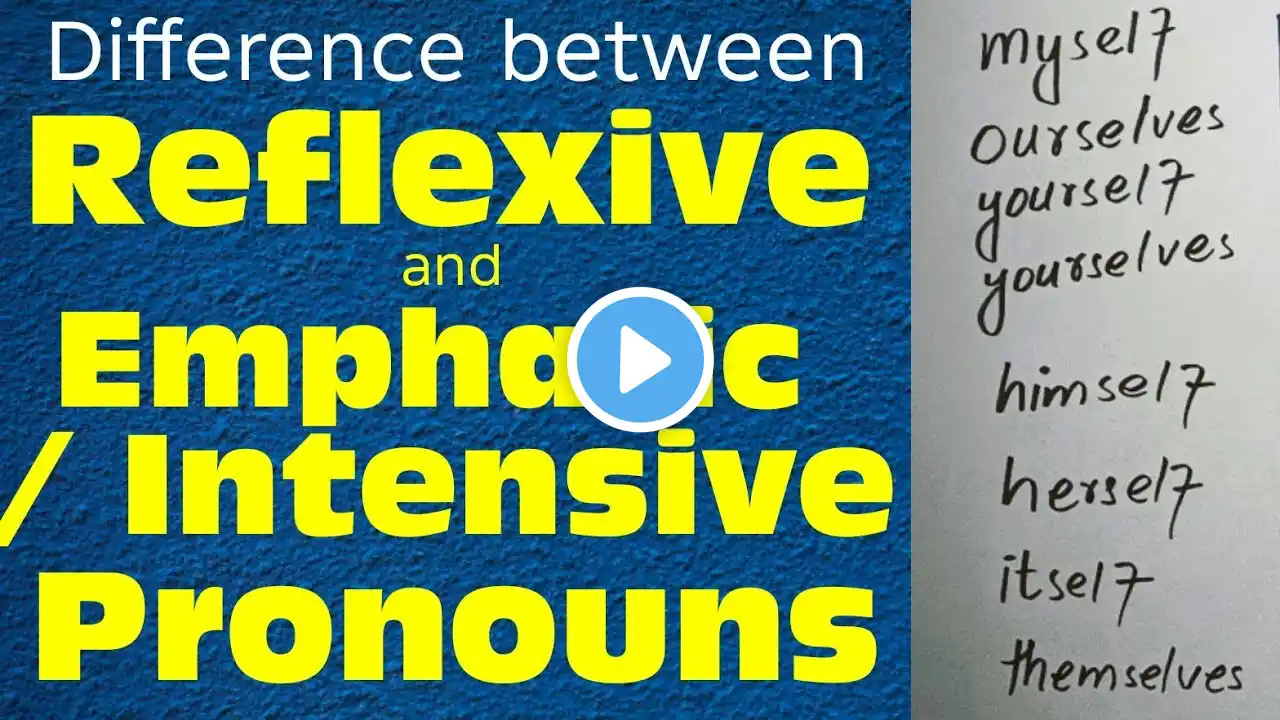
Reflexive Pronouns VS Emphatic Pronouns|Reflexive Pronouns|Emphatic Pronouns
zero से advanced तक English सीखें with grammar concepts| English for all the Competitive exams; SSC, Banking, Railway,NDA and others | सभी प्रतियोगी परीक्षाओं के लिए अंग्रेजी; एसएससी, बैंकिंग, रेलवे, एनडीए और अन्य| Reflexive Pronouns (आत्मवाचक सर्वनाम) Definition: जब subject और object एक ही हों, और verb का action उसी person पर वापस लौटे, तब जो pronoun इस्तेमाल होता है उसे Reflexive Pronoun कहते हैं। Examples: myself yourself himself herself itself ourselves yourselves themselves Use: जब कोई काम खुद पर किया जाए। He hurt himself. Preposition के बाद भी इस्तेमाल होता है। She is talking to herself. --- Emphatic Pronouns (बलवाचक सर्वनाम) Definition: जब किसी noun या pronoun पर ज़ोर (emphasis) दिया जाए, तब वही reflexive words emphatic pronoun कहलाते हैं। इनका काम सिर्फ बात पर जोर देना है, action खुद पर नहीं किया जाता। Examples: (Reflexive pronouns जैसे ही रूप) myself yourself himself herself itself ourselves yourselves themselves Use: Subject पर ज़ोर देने के लिए। He himself completed the project. सिर्फ जोर, action subject पर नहीं लौटता। I myself saw it happen. --- Difference in One Line Reflexive pronoun: Action वापस subject पर आता है। Emphatic pronoun: Subject पर सिर्फ जोर दिया जाता है; action वापस नहीं आता। Follow on: Facebook- https://www.facebook.com/profile.php?... Instagram-https://www.instagram.com/invites/con... Telegram- https://t.me/+-1kh9-B9t-c1MjJl https://t.me/theenglishforsuccesss