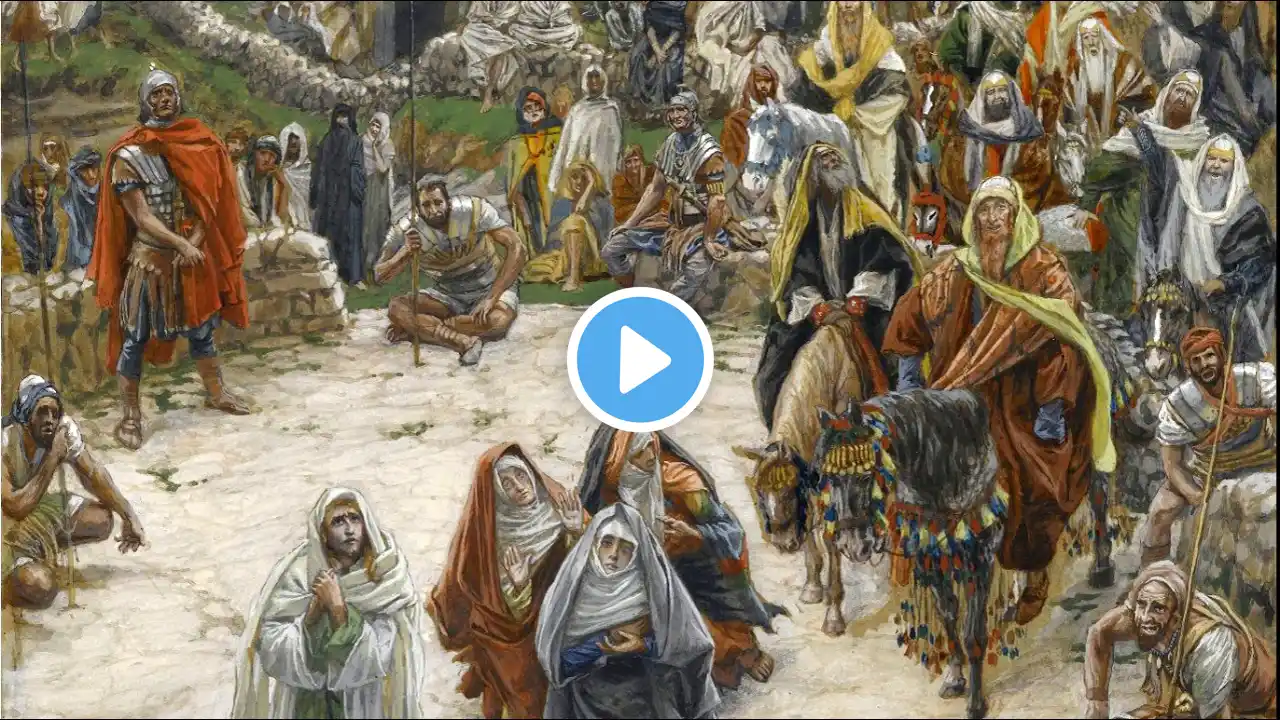
Penitent thief | Wikipedia audio article
This is an audio version of the Wikipedia Article: Penitent thief Listening is a more natural way of learning, when compared to reading. Written language only began at around 3200 BC, but spoken language has existed long ago. Learning by listening is a great way to: increases imagination and understanding improves your listening skills improves your own spoken accent learn while on the move reduce eye strain Now learn the vast amount of general knowledge available on Wikipedia through audio (audio article). You could even learn subconsciously by playing the audio while you are sleeping! If you are planning to listen a lot, you could try using a bone conduction headphone, or a standard speaker instead of an earphone. You can find other Wikipedia audio articles too at: / @wikipediatts983 In case you don't find one that you were looking for, put a comment. This video uses Google TTS en-US-Standard-D voice. SUMMARY ======= The Penitent Thief, also known as the Good Thief or the Thief on the Cross, is one of two unnamed persons mentioned in a version of the Crucifixion of Jesus in the New Testament. The Gospel of Luke describes one asking Jesus to "remember him" when Jesus will have "come into" his kingdom. The other, as the impenitent thief, asks Jesus why he cannot save himself. He is officially venerated in the Catholic Church. The Roman Martyrology places his commemoration on March 25, together with the Feast of the Annunciation, because of a Medieval Catholic hypothesis that Christ (and the penitent thief) were crucified and died exactly on the anniversary of Christ's Incarnation. He is given the name Dismas in the Gospel of Nicodemus and is traditionally known in Catholicism as "Saint Dismas" (sometimes Dysmas; in Spanish and Portuguese, Dimas). Other traditions have bestowed other names: In Coptic Orthodox tradition and the Narrative of Joseph of Arimathea, he is named Demas. In the Codex Colbertinus, he is named Zoatham. In Russian Orthodox tradition, he is named Rakh.