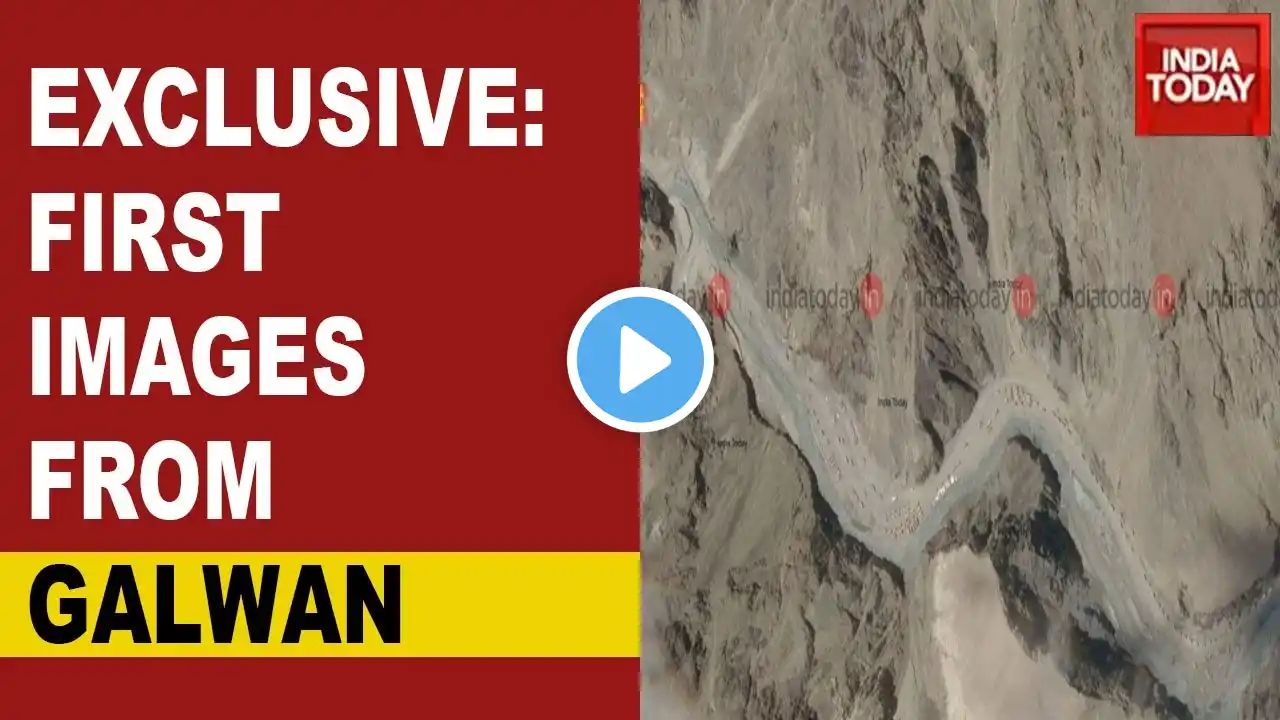
Latest LAC, Protests against China over killing of Indian soldiers
Soldiers fell to their deaths as India and China's troops fought with rocks India shocked by Himalayan border clash in which unarmed troops fought in the dark The hand-to-hand combat lasted hours, on steep, jagged terrain, with iron bars, rocks and fists. Neither side carried guns. Most of the soldiers killed in the worst fighting between India and China in 60 years lost their footing or were knocked from the narrow Himalayan ridge, plunging to their deaths. India has reacted with shock and caution to the loss of at least 20 soldiers on its disputed border with China, with images of the Chinese president, Xi Jinping, burned in Indian cities. In his first public comments on the dispute, prime minister Narendra Modi led a two-minute silence for the killed soldiers and said India would “defend every stone, every inch of its territory.” “I would like to assure the nation that the sacrifice of our jawans [troops] will not be in vain,” said Modi, speaking at a televised meeting of India’s chief ministers. “For us, the unity and sovereignty of the country is the most important.” A day after reports of the “violent face-off” in the western Himalayas emerged, Indian news outlets began naming some of the dead and a clearer picture started to build of what transpired on Monday night on the high, steep ridge lines above the fast-flowing Galwan River. The killings were sparked when a patrol of Indian soldiers encountered Chinese troops in a steep section of the mountainous region they believed the People’s Liberation Army (PLA) had retreated from, in line with a 6 June disengagement agreement, sources in Delhi said. The Indian government have alleged that what followed was a “premeditated” ambush on their troops by PLA forces. The two armies jostled and hand-to-hand fighting broke out – neither side armed in line with decades of tradition supposed to ward off the possibility of escalation between the nuclear-armed neighbours. Then an Indian commanding officer was pushed from the narrow ridge and fell to his death in the gorge below. Reinforcements from the Indian side were summoned from a post about 2 miles away and eventually about 600 men were fighting with stones, iron rods and other makeshift weapons in near-total darkness for up to six hours, Indian government sources said, with most deaths on both sides occurring from soldiers falling or being knocked from mountain terrain. Indian soldiers were said to be in critical condition. Indian media outlets cited intelligence sources claiming up to 50 Chinese soldiers may have been killed in the melee but did not present the evidence. Chinese CCTV’s widely watched evening news broadcast made no mention of the border confrontation on Tuesday. Following a phonecall on Wednesday night between India’s minister for external affairs, Subrahmanyam Jaishankar, and the Chinese foreign minister, Wang Yi, the two sides issued statements agreeing to de-escalation and resolving the conflict “in a responsible manner”. However, there were also significant discrepancies between the Indian and Chinese version of events. India accused the Chinese troops of violating the disengagement agreement and carrying out a “pre-meditated and planned action” against Indian troops that was “directly responsible for the resulting violence and casualties.” Wang Yi claimed India was solely responsible for the conflict, saying its forces had on three occasions illegally crossed over into the Chinese side of the LAC and demanded Indian punish their forces responsible. As photos and details of some of the Indian soldiers who died were circulated on Tuesday there were small demonstrations including in Bhopal in Madhya Pradesh state and in the Gujarati city Ahmedabad, where protesters burned pictures of Xi Jinping. For more information visit channel: UCylssdBmeY4WvID8LBiEN0g