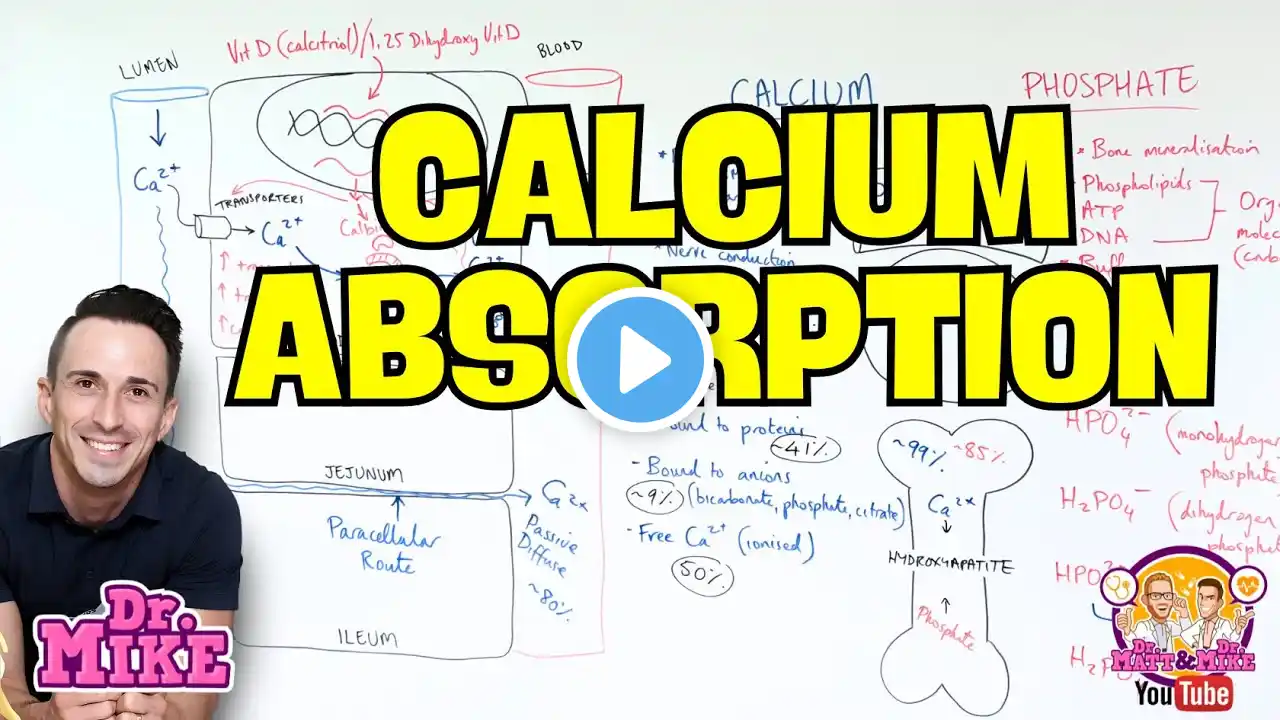
Calcium Homeostasis | Introduction
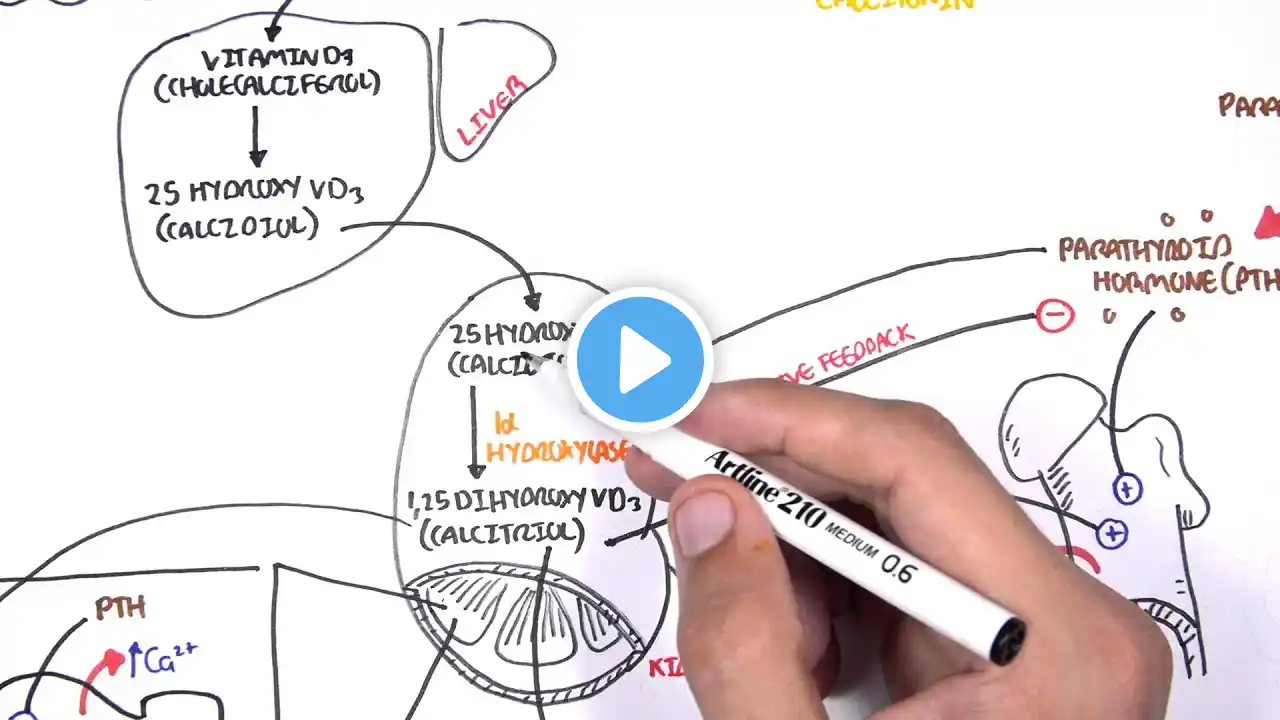
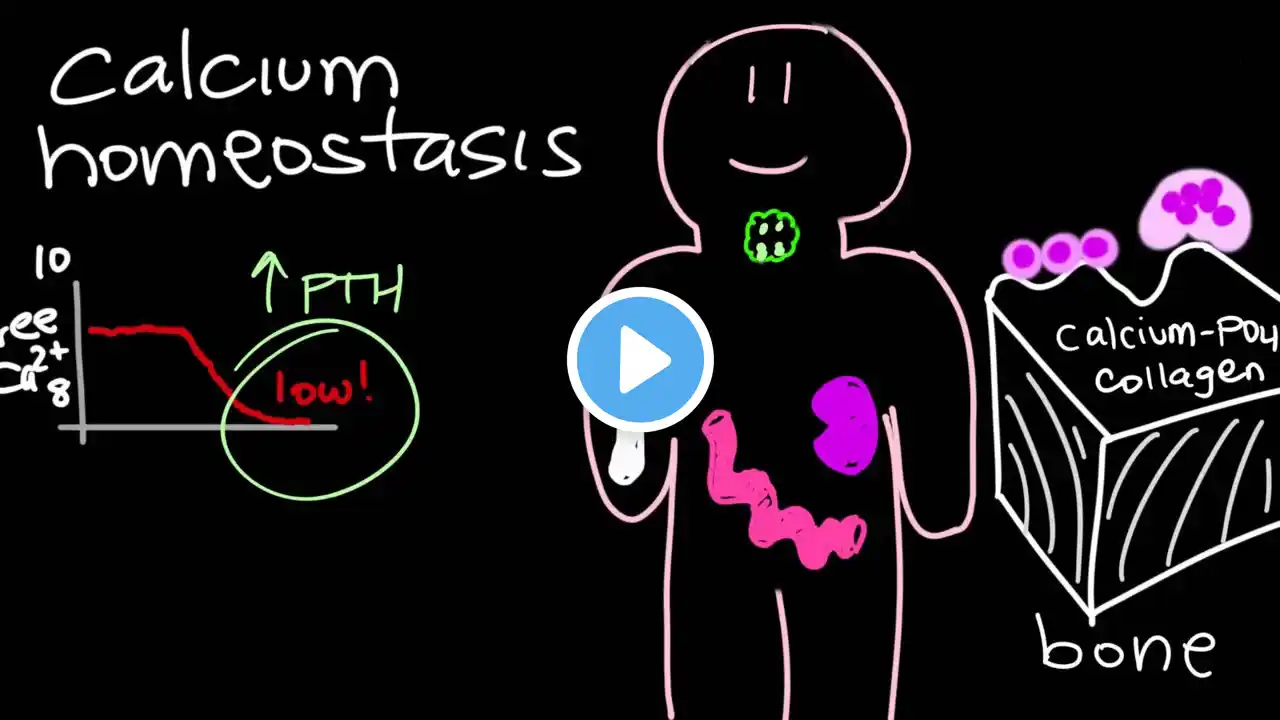
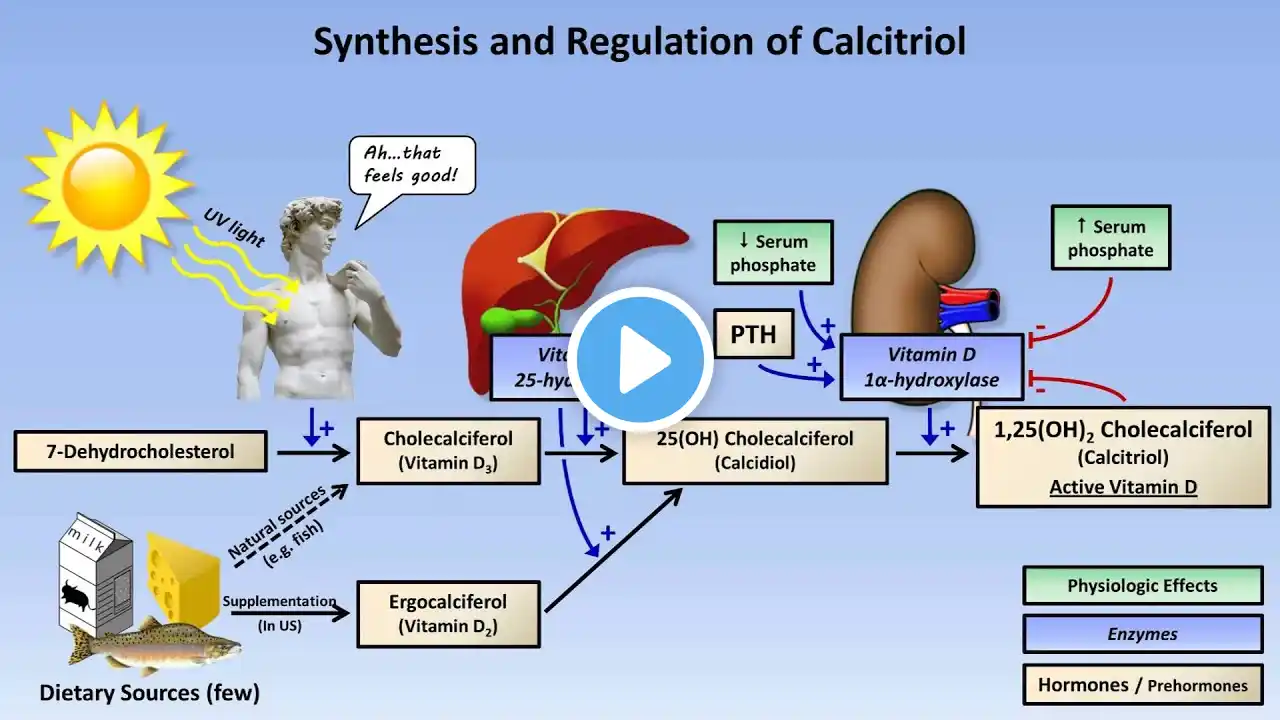
Calcium is a very important trigger for a lot of physiological processes going on in our body. Fortunately, we have hormones that help us maintain the serum calcium levels. So, let’s know more about these hormones involved in calcium regulation. ▬ 📌 Calcium Regulating Hormones In a normal young healthy adult, there is about 1100 g of calcium in the body. That forms about 1.5% of total body weight. Out of this total Calcium in the body, about 99% is in the bones and teeth, and the rest 1% can be exchanged freely between plasma and the extracellular and intracellular compartments. Normal blood calcium level ranges between 9, and 10.5 mg / dL. Calcium is present in plasma by binding with plasma proteins, or in ionized and unionized form. For controlling the plasma levels of calcium, we have three hormones. 🔹Parathyroid Hormone (PTH) - which increases blood calcium. 🔹Vitamin D3 - that increases blood calcium. 🔹Calcitonin - that reduces blood calcium. ▬ 📌 Parathyroid Hormone (PTH) Parathyroid Hormone is released from the parathyroid hormone when it is triggered by the low levels of calcium in the blood. Parathormone enhances the resorption of calcium from the bones by acting directly on osteoblasts and indirectly on osteoclasts of the bone. In kidneys, it increases calcium reabsorption mainly from the distal convoluted tubule, and the proximal part of the collecting duct, and inhibits phosphate reabsorption in the proximal tubule, increasing its excretion in urine. PTH also increases the conversion of 25-hydroxycholecalciferol to the 1,25-dihydroxycholecalciferol, which increases the absorption of calcium ions from the GI tract, indirectly. ▬ 📌 Vitamin D and 1,25-Dihydroxycholecalciferol Vitamin D is a fat-soluble steroid. It includes Ergocalciferol, which is called vitamin D2, and cholecalciferol known as vitamin D3, derived from pro-vitamin D (7-dehydrocholesterol). Activation of Vitamin D3 occurs in 2 steps. First: Cholecalciferol is converted into 25-hydroxycholecalciferol in the liver. Second: 25-hydroxycholecalciferol is converted into 1,25-dihydroxycholecalciferol in the kidney, by enzyme 1α-hydroxylase enzyme. Now, this 1,25-dihydroxycholecalciferol increases the calcium level in plasma. But how? is the question. To understand the complete mechanism, you need to watch the video. ▬ 📌 Calcitonin Calcitonin is secreted by the parafollicular cells, often called C-cells, situated amongst the follicles in the butterfly-shaped thyroid gland. Its normal plasma level is 1 to 2 ng/dL. 🔸In Kidneys - Calcitonin inhibits the reabsorption of calcium and phosphate from the renal tubule and excreting them. 🔸On Bones - Calcitonin inhibits osteoclasts and stimulates osteoblastic activity. Thus, decreasing plasma calcium as a result. You can learn about them in detail in the video. ▬ 🎬 5500+ sqadia.com Medical Videos ▬▬▬▬▬▬▬▬▬▬ 👩🏻⚕️ Accessible Medical Student Education 24/7/365 💡 Simplifying Medical Learning 💪 Study Hard, Dream Big, Achieve More