Homologous vs Analogous Structures | Divergent and Convergent Evolution | Biology
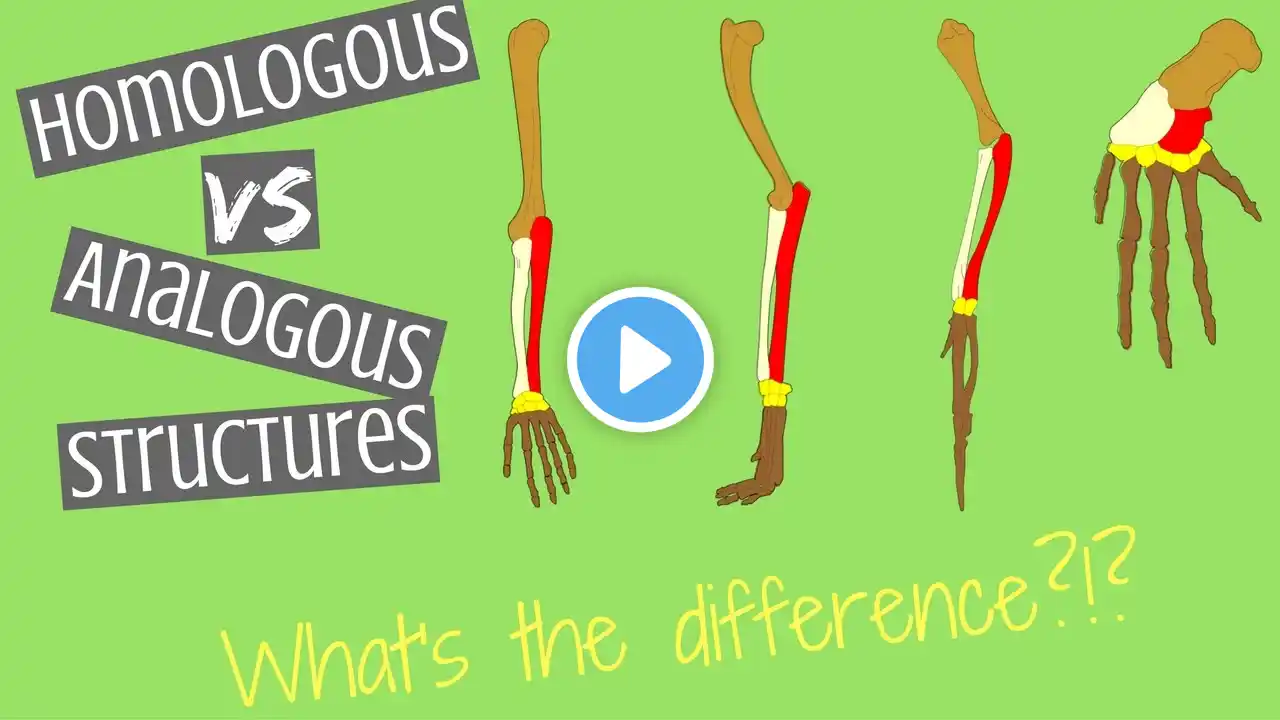
Review homologous and analogous structures with Quizlet: 🔹 Practice test → https://quizlet.com/test-questions/ho... 🔹 Study guide → https://quizlet.com/study-guides/homo... In this lesson, you’ll learn the key difference between homologous and analogous structures and how they connect to divergent and convergent evolution. We’ll explore classic examples like human hands, bat wings, and dolphin flippers, and see how their internal bone patterns reveal shared ancestry. You’ll also learn why structures like bat wings and eagle wings can perform the same function but evolve independently. We’ll even look at surprising plant examples, including pitcher plants, Venus flytraps, and cactus spines, to show how different structures can originate from the same ancestral organ. By the end of this video, you’ll be able to quickly identify whether structures are homologous or analogous, and understand how these patterns reveal the story of evolution. What you'll learn What homologous structures are What analogous structures are How scientists identify shared ancestry using internal structures Examples like human arms, bat wings, dolphin flippers, and shark fins The difference between divergent evolution and convergent evolution Why similar functions don’t always mean common ancestry This video is perfect for biology students studying heredity and evolution, preparing for exams, or reviewing key evolutionary concepts. #Biology #Evolution #HomologousStructures