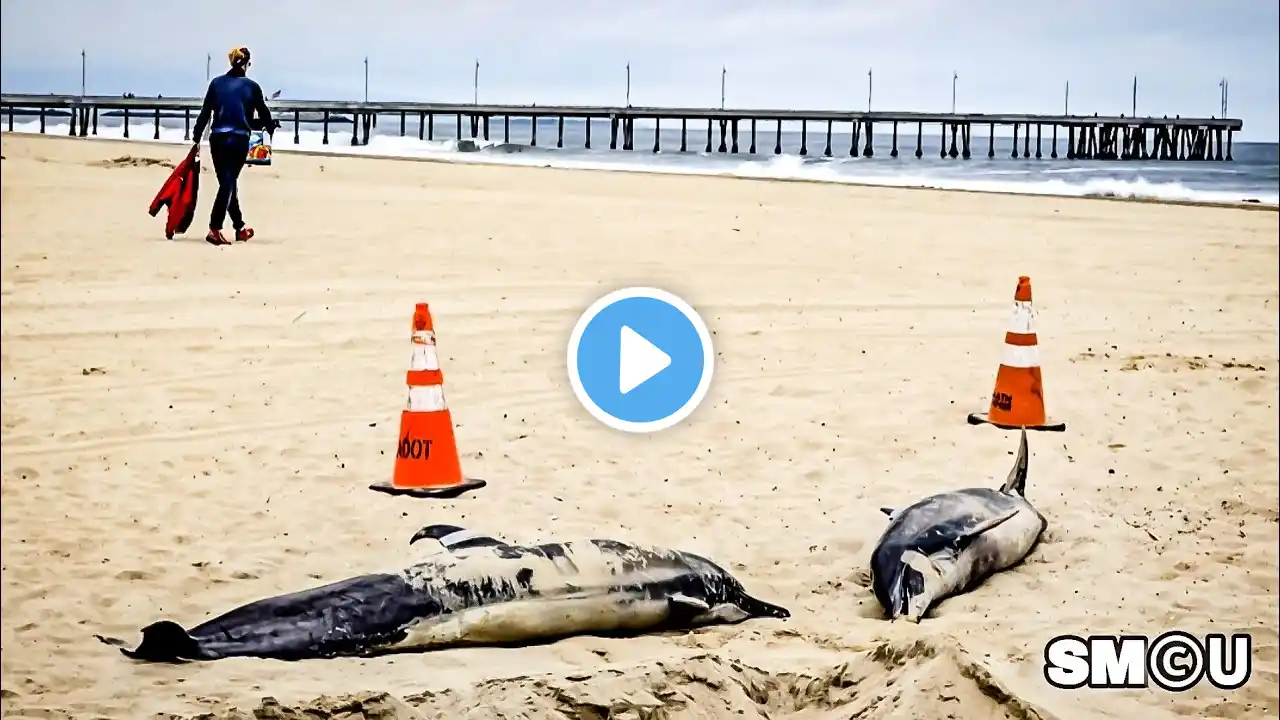
𝗗𝗢𝗟𝗣𝗛𝗜𝗡 𝗗𝗘𝗔𝗧𝗛 𝗧𝗢𝗟𝗟 𝗥𝗜𝗦𝗘𝗦: Multiple Dolphins Wash Ashore Amid Toxic Outbreak
LOS ANGELES COUNTY — April 24, 2025 — A troubling pattern is emerging along the Southern California coastline, as multiple dolphins have been found dead in recent days on beaches in both Venice and Santa Monica. On Wednesday, April 23, at least four deceased dolphins were documented along the Venice Beach shoreline. Just last week, another dead dolphin was observed along the sand at Santa Monica Beach. The strandings are believed to be part of a broader marine wildlife crisis fueled by harmful algal blooms, which are producing the neurotoxin domoic acid. This naturally occurring toxin is released by the microscopic algae Pseudo-nitzschia australis, and accumulates in small fish such as sardines and anchovies — key prey for dolphins, sea lions, and seabirds. Ingesting high levels of domoic acid can lead to seizures, brain damage, disorientation, and death in affected animals. The Marine Mammal Care Center (MMCC) and other wildlife rescue agencies across Los Angeles County have been overwhelmed by a surge in reports involving sick and stranded sea lions, dolphins, and birds. As calls continue to rise, authorities are urging the public to exercise caution and help minimize stress on the animals. Members of the public are reminded to maintain a minimum distance of 50 feet from any sick, injured, or deceased marine mammals. Wildlife officials warn that affected animals may be disoriented, unpredictable, or aggressive due to neurological distress. Dogs should remain leashed at all times, and any sightings should be promptly reported to the Marine Mammal Care Center’s hotline at 1-800-39-WHALE. Lifeguards should also be notified immediately in the event of a stranding or carcass discovery. The increasing frequency of dolphin and sea lion deaths highlights the growing environmental challenges confronting California’s marine ecosystems. Toxic algal blooms — often fueled by rising ocean temperatures and nutrient pollution — are becoming more frequent and more severe, placing additional pressure on coastal wildlife. Since its founding in 1992, MMCC has rescued and rehabilitated more than 8,000 marine mammals. The organization continues to play a critical role in the regional response to domoic acid outbreaks and remains on the front lines of marine conservation in Southern California. As the crisis continues to unfold, officials and conservationists alike are calling for heightened public awareness, robust environmental monitoring, and support for rescue and research institutions working to protect the region’s vulnerable marine life.