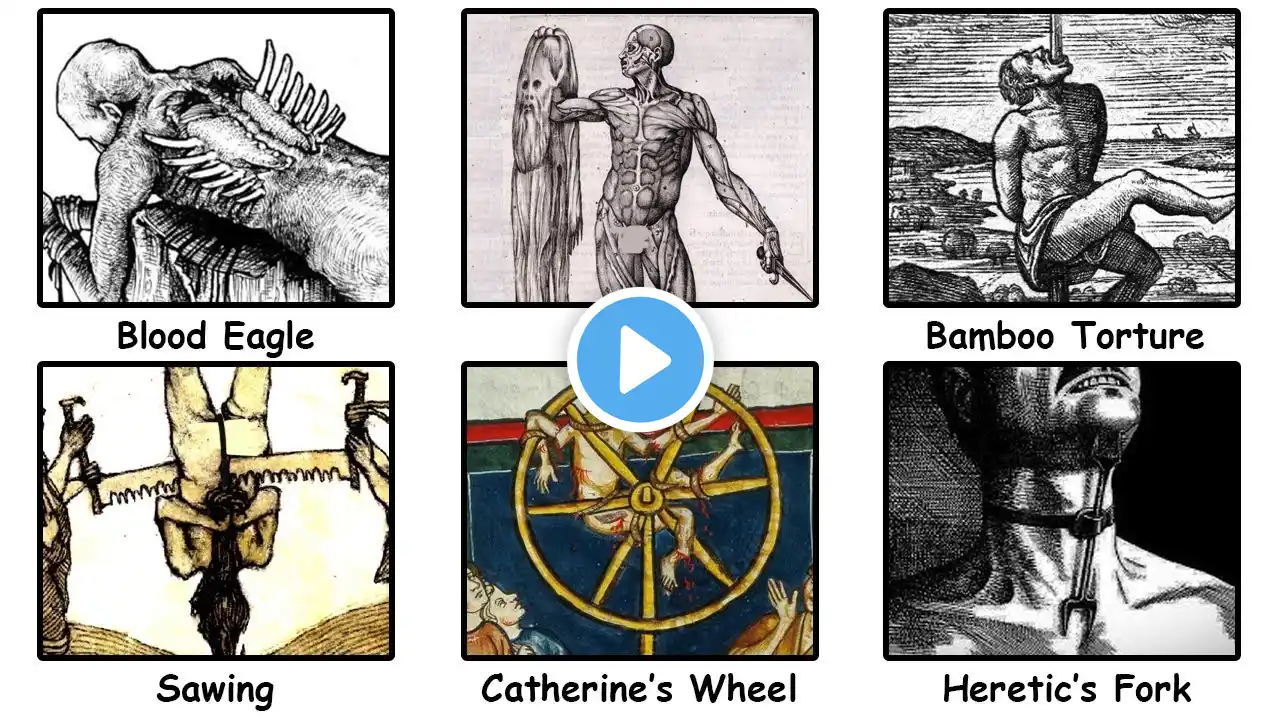
Death by Boiling: One of the Worst Punishments in History
Less than 500 years ago, death by boiling was a punishment that was widely used in cases of particularly serious offenses such as counterfeiting money, poisoning, or exceptionally violent crimes. One of the best documented cases of an execution by boiling is the case of one Richard Roose who was executed in Smithfield, London in 1531. We know only very little about this man except that he was the cook of the Bishop of Rochester . One day in winter 1531 he prepared porridge for his master and his guests in the kitchen of the bishop's palace in Lambeth March. As was customary, the leftovers were distributed to the poor and needy. Soon after, the alarm bell was ringing because all those who had eaten from the porridge suddenly fell seriously ill. Two of the beggars even died a while later. For unknown reasons the bishop himself had not eaten of the porridge and took no harm. Investigations revealed that the porridge had been poisoned and Roose was arrested and questioned. He admitted that he had mixed laxatives into the food as a joke, but with no ill intent. For more punishment related stuf checkout Terry Deary's book Cruel Crimes and Painful Punishments: https://amzn.to/46QfWfh Bibliography Abbot, G., What a Way to Go, New York 2007. Kesselring, K.J., A Draft of the 1531 'Acte for Poysoning', The English Historical Review Vol. 116 (2001), No. 468, pp. 894–899. Mayer, M.M, Kleine Chronik der Reichsstadt Nürnberg: Mit einem Grundrisse, Nürnberg 1847 Pettifer, E. W., Punishments of Former Days, Winchester 1992. Sim, A., Food & Feast in Tudor England, Stroud 2005.