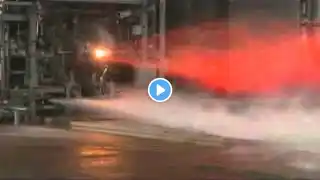
3D Printed Rocket Motor - Additive Manufactured Propulsion System
The first known functional Additively Manufactured Propulsion System - Hybrid (AMPS-H) motor that was tested during the 2010 Smallsat conference at the Logan airport. This Engineering Design Unit (EDU) was a proof of concept design and demonstrated the ability of the AM process to manufacturer a high performance hot gas propulsion system. Past limitations with the AM process and low tensile strength build materials, didn't allow for functional parts to be made that could hold high pressures and temperatures without structural failure or leaking through the part's structure. By using The AMPS-H EDU was a 10 cm sphere that simulated a possible 1U form factor propulsion system. The AM process used Windform XT 2.0 which is a high strength carbon-fiber filled polyamide to produce the AMPS-H motor's oxidizer tank, combustion chamber, and fuel grain. With limited volume to work with the combustion chamber, fuel grain, and nozzle were located inside the oxidizer tank making for a very energy dense design. Ground support valves were used to load propellant into the spherical tank and then to inject the oxidizer into the combustion chamber. A single use chemical igniter was employed to start the motor, with the burn time lasting 16 seconds.