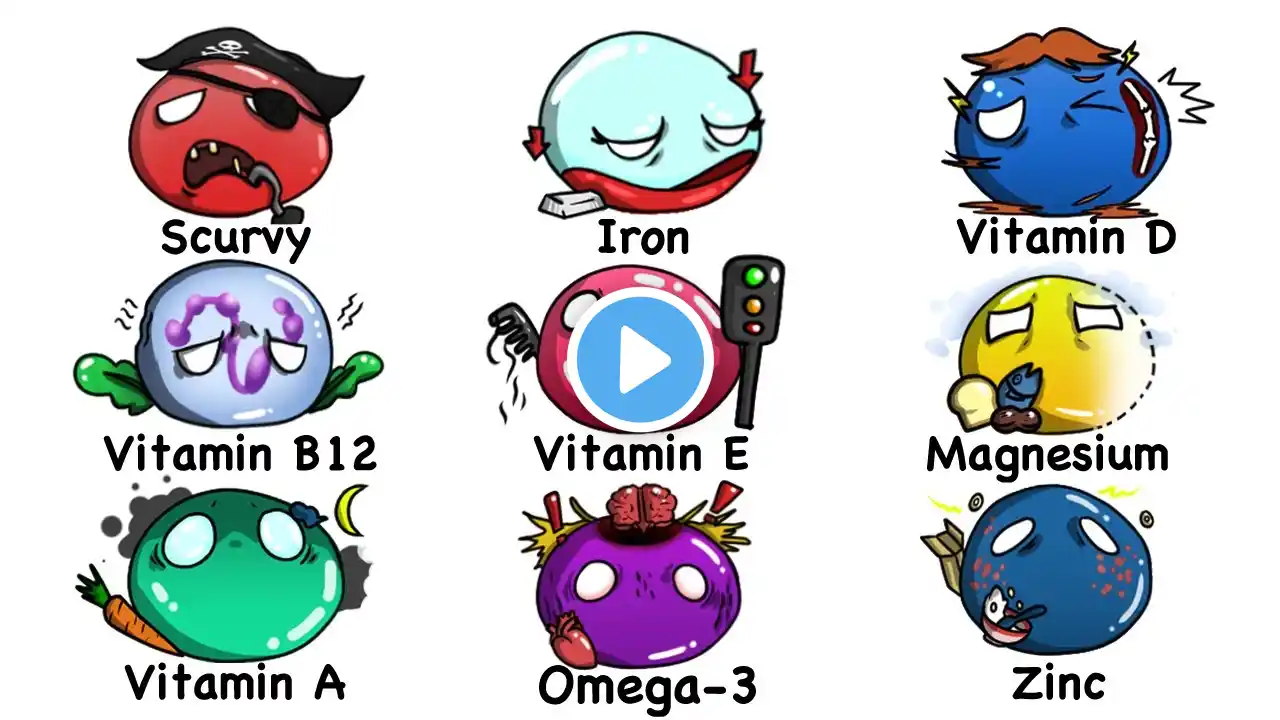
Malnutrition: Types, Deficiency Diseases, and Treatment - KS3 Science - Pre GCSE - Biology
Rethinking Malnutrition: It's Not What You Think Introduction: The Hidden Faces of Malnutrition When you hear the word "malnutrition," what image comes to mind? For many of us, it’s a picture of extreme food scarcity, of a person not having nearly enough to eat. While that is a devastating reality for millions, it represents only one part of a much larger and more complex story. The full story of malnutrition is often hidden in plain sight, affecting communities in every corner of the globe, from developing nations to the wealthiest ones. It’s a condition that can look surprisingly different from what we expect, challenging our most basic assumptions about what it means to be nourished. This article will reveal four of the most surprising and important truths that will change how you think about malnutrition. -------------------------------------------------------------------------------- 1. Malnutrition Includes Eating Too Much While we almost always associate malnutrition with having too little food, the definition is much broader: it happens when people do not eat the right amounts of nutrients. This means it also occurs when people eat too much, particularly foods that are high in fat and sugar. This form of malnutrition leads to obesity, a serious medical condition that can cause life-threatening health problems. The risks associated with obesity are severe and include type 2 diabetes, heart disease, and some types of cancer. This fact reframes malnutrition not simply as a problem of quantity, but as a critical issue of nutritional balance and quality. 2. It’s a Problem Everywhere, Not Just Far Away It is a common misconception that malnutrition is a problem confined to distant, developing countries. In reality, malnutrition happens all over the world and is a universal health challenge. Dan Walden, Senior Programmes Specialist for Emergencies at UNICEF UK, confirms this global scope: It's about understanding the value of the nutrients, it's awareness, it's access to the food. This is an issue for everyone. It's not just an issue in developing countries. Understanding this makes malnutrition a universal issue that requires awareness and action in every community, including our own. 3. You Can Be Full But Still Nutrient-Starved It is entirely possible for a person to eat enough food to meet their daily energy needs but still be malnourished. This happens when their diet lacks specific essential vitamins and minerals, which can lead to serious "deficiency diseases." A full stomach does not guarantee a nourished body. For example, a diet lacking key nutrients can cause: Iron deficiency: Can cause anaemia, leading to tiredness and shortness of breath. Vitamin A deficiency: Can result in blindness. Vitamin C deficiency: Causes scurvy, with symptoms that include bleeding gums, bulging eyes, and scaly skin. Protein deficiency: Can affect many bodily functions, often resulting in swollen, puffy skin and muscle wastage. This highlights the critical importance of a diverse, nutrient-rich diet over the simple act of consuming enough calories to feel full. 4. A Simple Tape Measure Can Be a Lifesaver In the fight against the most life-threatening forms of malnutrition, some of the most effective tools are remarkably simple. Health workers can identify acute malnutrition in children using a MUAC (Mid-Upper Arm Circumference) band—essentially a specialized tape measure. This tool is used to identify acute malnutrition, a condition where a child is at immediate risk of dying. The band is wrapped around a child's upper arm to see if they are dangerously thin. The measurement can be stark; sometimes a child's arm can be "right down to the size of a two pound coin." For children identified with severe acute malnutrition, there is a powerful and specific treatment: "ready-to-use therapeutic food." This is a high-energy food that comes in a sachet and can be eaten straight from the packet. It is scientifically formulated to save a life, containing large amounts of lipids and carbohydrates to deliver critical nutrients efficiently. These simple, practical tools offer a sense of hope, demonstrating that there are effective, on-the-ground solutions to save lives from the most immediate dangers of malnutrition. Conclusion: A New Perspective on Nourishment As we've seen, our common understanding of malnutrition is often incomplete. It is not just about hunger but is a complex issue of nutritional balance that affects people globally in various ways—from over-consumption in wealthy nations to specific nutrient deficiencies in those with full stomachs. Realizing that malnutrition is a multifaceted problem is the first step toward addressing it effectively, both at home and abroad. Now that you know malnutrition can hide in plain sight, how might it change the way you think about food and health in your own community?