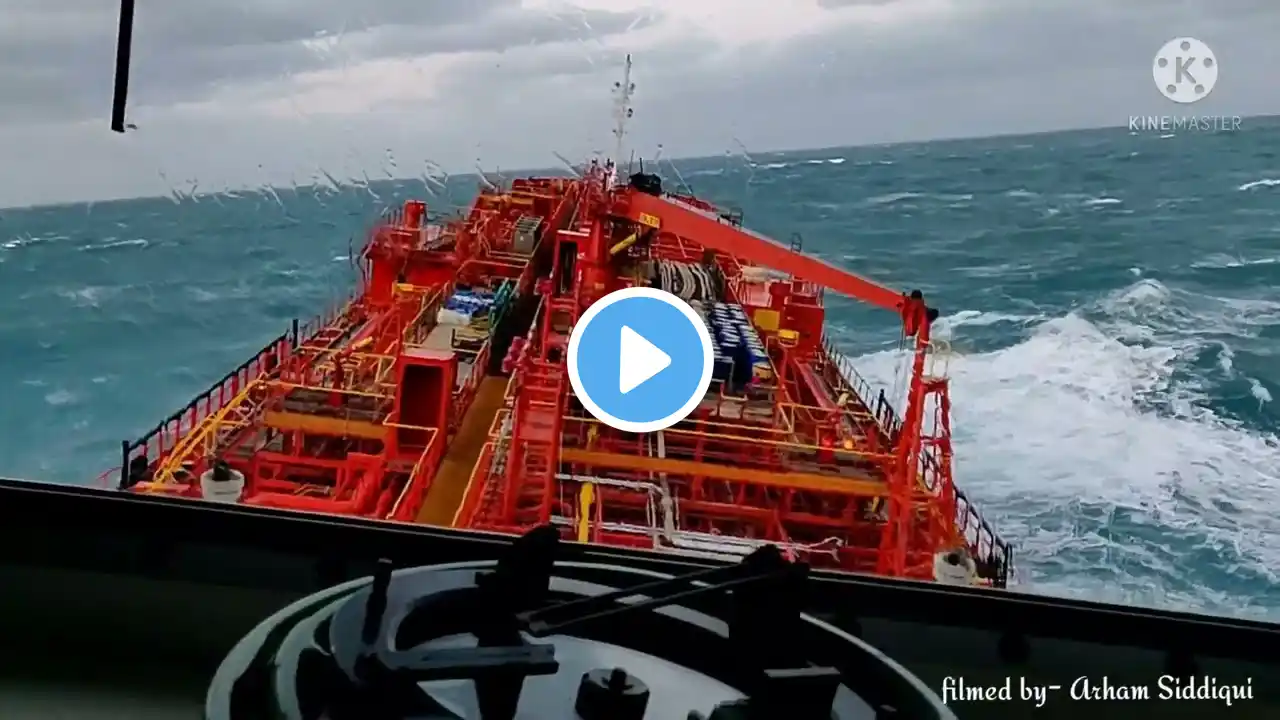
Rough Weather | Norwegian Sea | 70kts Wind Speed | Heavy Rolling #Thetraveloholicsailor
How To Pass Rough Weather | Norwegian Sea | 70kts Wind Speed | Heavy Rolling #Thetraveloholicsailor "How to Survive a Sea Storm" “Fare wind and Calm Seas” – this is what a seafarer hopes for when he is sailing at high seas. However, nature is bound to show ups and downs, and rough weather may hit a vessel in the open sea with no time to react. Even if there is a practice of sending pre-weather warnings to ships for route change or speed alterations, every seaman has experienced a high swell and unfriendly side of the sea. Time is a critical factor for reacting to a situation like rough weather. If a pre-warning is available with the ship, then staff can do the preparation; but if the warning period is short or if there is a sudden strike of rough waves and bad weather then handling of the ship depends on the knowledge, training, skills, and, team efforts of ship’s staff. It is very important for a seafarer to know what to do in a rough weather situation so that mistakes can be avoided and in minimal time, the ship can be prepared for a rough sea. The following are some basic precautions to be taken when in rough weather: In the open sea, the vessel is normally in autopilot. It is advisable to change over to hand or manual control to avoid excessive hunting of the rudder. One person should go and check all the oil levels, linkages and other important parameters of the steering gear in the steering room. If one motor is running, switch on other motor and run both of them together to get maximum available torque to turn the rudder. Sufficient man power including senior officers to be present in the bridge. Machinery control If the engine room is on UMS mode, man the engine room and make sure sufficient manpower is available. Monitoring all the parameters of the main propulsion plant and auxiliary power plant machinery. After getting a rough weather warning, all the spares in the engine room are to be stowed and lashed properly. In bad weather, the propeller will come in and out of the water and will fluctuate the main engine load. Hence rpm is to be reduced or the main engine control setting is to be put on rough weather mode. Always make sure for correct sump level of all the machinery as during rough sea ship will roll, resulting in false level alarm which can even trip the running machine and lead to a dangerous situation in bad weather. The level of all the important tanks is to be maintained so that the pump inlet should not lose suction at any time. Stand-by generator is to be kept on load until the bad weather situation stops. Watertight doors in the machinery spaces to be closed. Skylight and another opening to be closed. All trays are to be avoided from spilling in event of rough weather Other common precautions It is to be instructed to the crew not to go out on an open deck in rough weather. All the deck items like mooring ropes, lashing equipment, drums, etc. to be stored and lashed properly after their use. All openings in the deck for cargo and other spaces to be kept shut. All openings to the accommodation are to be kept shut. Shaft tunnel and other internal access space are to be used to go to the steering room or another compartment. Everyone must be aware of his/her duties pasted in the muster list. Elevator to be switched off as during rolling and pitching trip may occur and can cause trapping of the person inside. Always wear all the PPEs and use railings and other support while walking through any part of the ship to avoid trips and falls. Be alert and work in a team. #Thetraveloholicsailor #Sailors life #Norwegiansea #Heavyweather #Merchantnavy