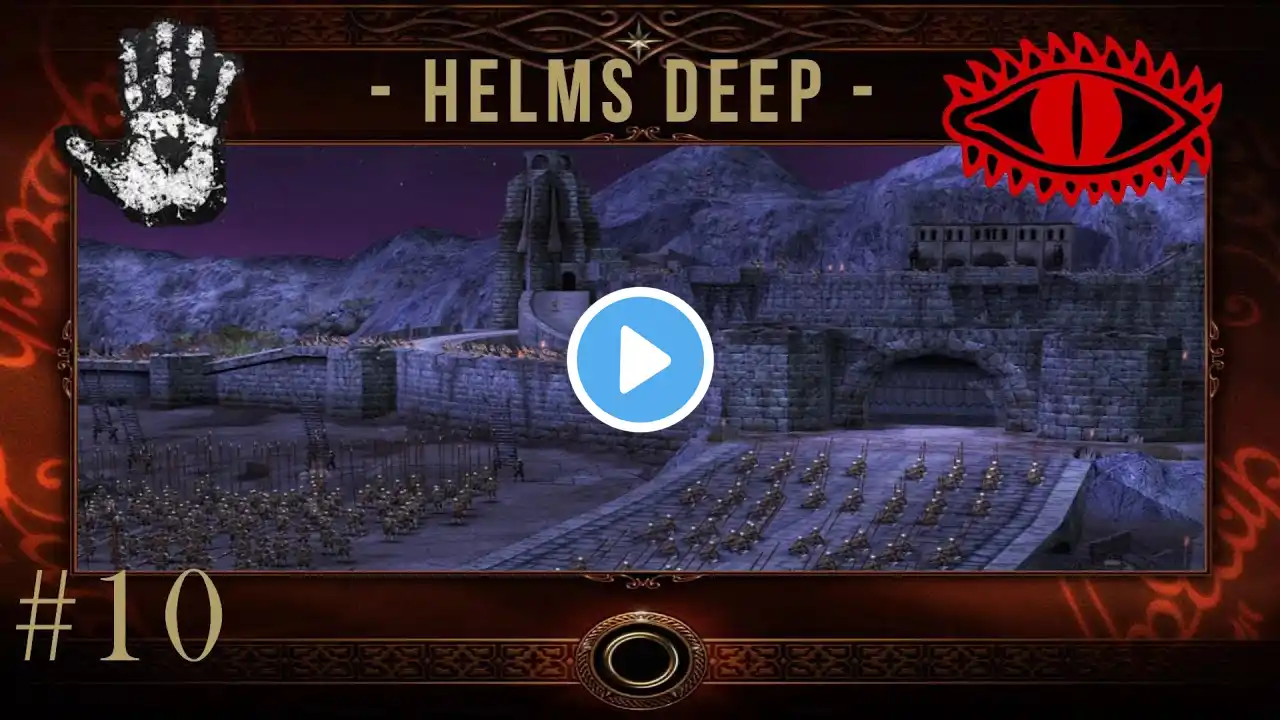
Let's Play The Lord of the Rings: The Battle for Middle-earth #11 | Good Act 10: Helm's Deep
I think we are outnumbered. The Lord of the Rings: The Battle for Middle-earth is a real-time strategy game developed by EA Los Angeles for Microsoft Windows. It was released in 2004 and is based on Peter Jackson's The Lord of the Rings film trilogy, in turn based on J. R. R. Tolkien's original novel. The game uses short video clips from the films and a number of the voice actors, including the hobbits and wizards. Like Command & Conquer: Generals, it uses the SAGE engine. The sequel, The Lord of the Rings: The Battle for Middle-earth II, was released in 2006. The game features traditional real-time strategy gameplay. However, bases cannot be build freely; instead, bases are erected at specific spots. Likewise resources expansions can be constructed at designated spots. Four factions on two sides wage the War of the Ring: Representing the Free Peoples are the horse-lords of Rohan, and Gondor with its forges and battlements. The Forces of Darkness are the fighting Uruk-hai of Isengard, and Mordor's orc hordes, bolstered by Haradrim, mûmakil and trolls. The good and evil forces of Middle-earth each have a campaign. They take place on an animated map of western Middle-earth, where each battle represents the defence or sacking of a territory. Armies and characters move on the map, and are transferred between missions. Some mandatory missions represent important events. Between these the player must take enough nearby territories in skirmish battles, variations on the theme of building a base and killing everyone. Each territory provides a permanent increase of power points to be used for active and passive support powers, increases the unit limit, or provides a multiplier for acquired resources.