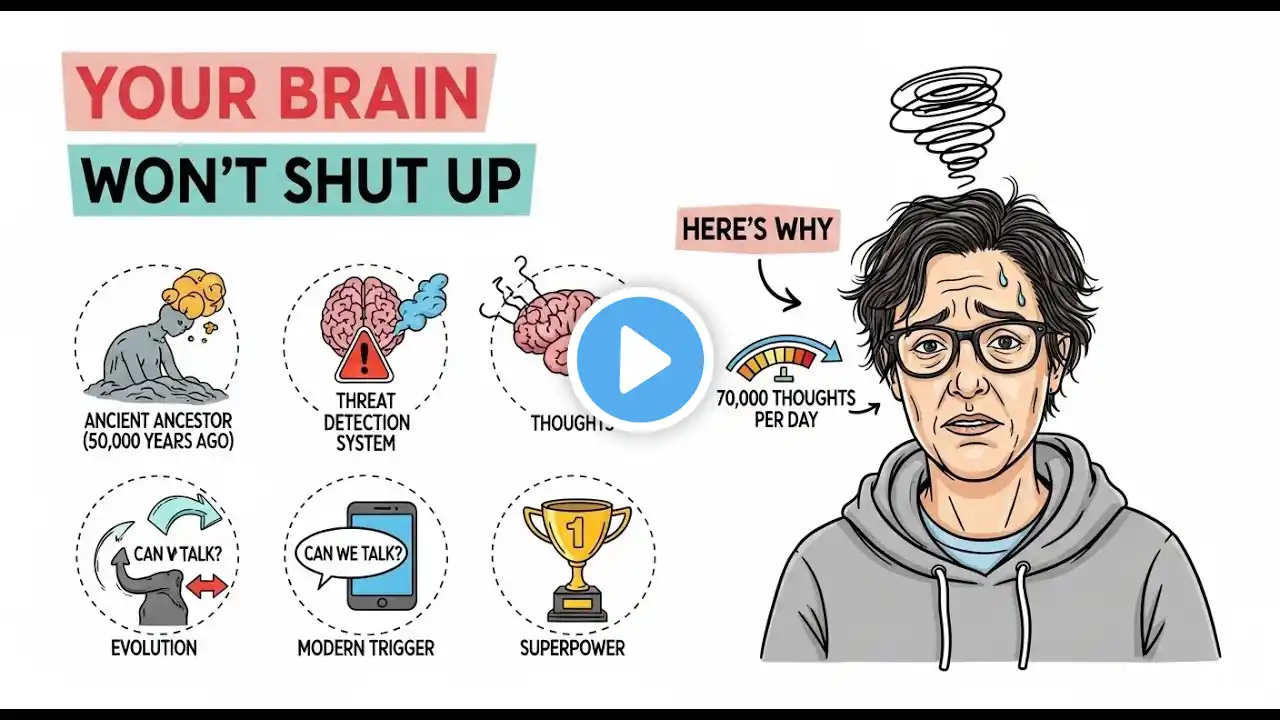
Why Overthinking Is Actually a Survival Mechanism
Why Overthinking Is Actually a Survival Mechanism Why does your brain overthink everything? Discover the surprising evolutionary reason behind your racing thoughts and how to turn overthinking from a curse into your superpower. 🧠 IN THIS VIDEO: The ancient survival mechanism that causes overthinking Why intelligent people overthink more (backed by science) How your ancestors' paranoia saved your life The Default Mode Network and what it does to your brain Why fighting your thoughts makes them worse How to channel overthinking into creativity and problem-solving Real examples: Da Vinci, Darwin, and Marie Curie's overthinking success 🔬 SCIENCE SOURCES: SUNY Downstate Medical Center - IQ & Anxiety Study Harvard University - Mind Wandering Research Default Mode Network Neuroscience 💡 KEY TAKEAWAYS: Overthinking isn't a bug—it's a feature. Your brain is doing exactly what it was designed to do: keep you alive. The same mechanism that kept your ancestors safe from predators now analyzes text messages and emails. Learn how to redirect this powerful cognitive tool toward productive goals instead of anxious spirals. 🎯 WHO THIS IS FOR: People who can't turn their brain off at night Overthinkers who replay conversations endlessly Anyone struggling with analysis paralysis Creative professionals looking to channel mental energy People with high intelligence and anxiety 🔔 SUBSCRIBE for more psychology videos that make you rethink everything you thought you knew about yourself. 👍 LIKE if this changed how you see your own mind 💬 COMMENT: What's the last thing you overthought? #Overthinking #AnxietyRelief #BrainScience #MentalHealth #Psychology #Neuroscience #SelfImprovement #PersonalDevelopment #CognitiveScience #MindfulnessAlternative DISCLAIMER: This video is for educational purposes only and is not a substitute for professional mental health advice. If you're struggling with anxiety or overthinking that interferes with daily life, please consult a licensed mental health professional. © 2026 Behavioural Code| All Rights Reserved


