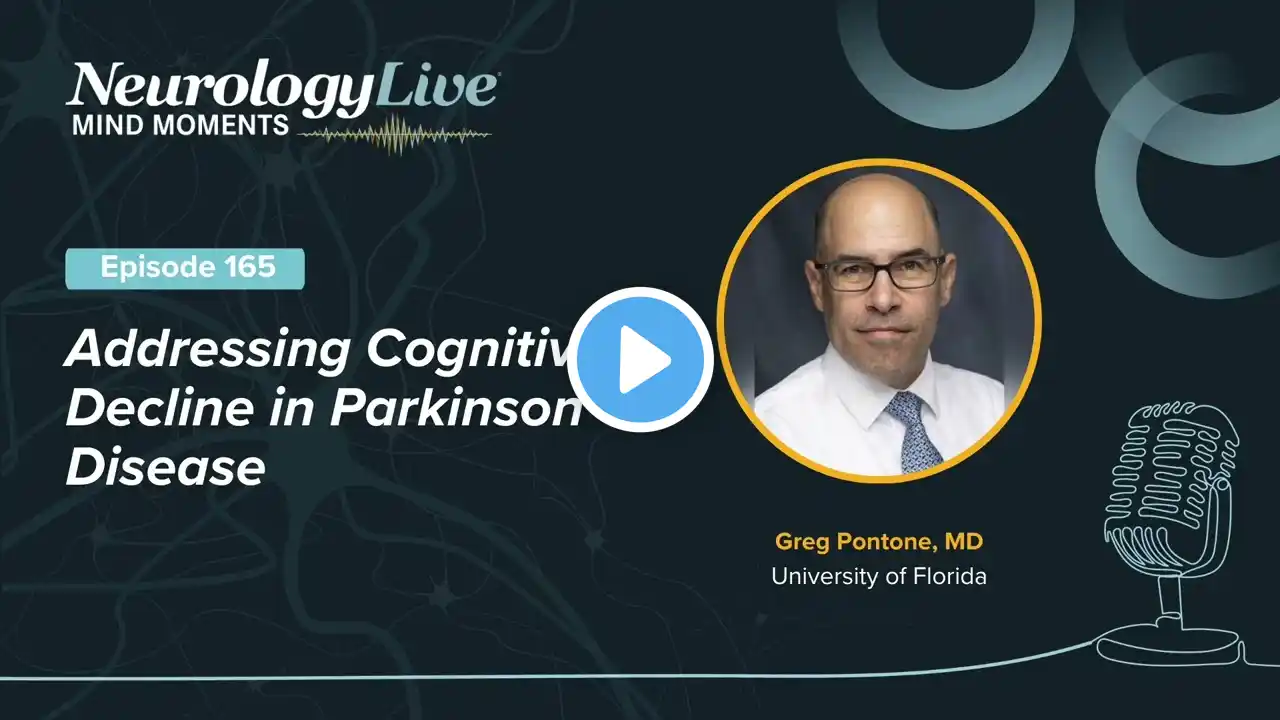
Episode 165: Addressing Cognitive Decline in Parkinson Disease
Link to episode: The Mind Moments podcast features exclusive interviews with leaders in the field discussing the latest research and disease management strategies across the breadth of neurology, including epilepsy, multiple sclerosis, Parkinson disease, dementia, sleep disorders, and more. In this Mind Moments episode, Greg Pontone, MD, Chief of Aging Behavioral and Cognitive Neurology at the University of Florida, joins the podcast to discuss the interplay between cognition and Parkinson disease, with a focus on how clinicians can better recognize and manage cognitive changes across the disease course. Pontone outlines the prevalence of early cognitive impairment, noting that a significant proportion of patients may present with subtle deficits at diagnosis, particularly in executive function and processing speed. The conversation explores the impact of commonly used medications on cognition, including anticholinergics and benzodiazepines, and how clinicians can balance therapeutic benefit with cognitive risk. Pontone also reviews current treatment strategies, including cholinesterase inhibitors and memantine, while emphasizing the importance of nonpharmacologic approaches such as structured routines and cognitive training. Additional discussion highlights the evolving role of biomarkers, the overlap between Parkinson disease and Alzheimer pathology, and the need for earlier recognition, better patient education, and continued research to improve long-term cognitive outcomes in this population. EPISODE BREAKDOWN 1:10 – Prevalence and early signs of cognitive impairment in Parkinson disease 2:30 – Medication-related cognitive effects and contributing drug classes 4:20 – Balancing therapeutic benefit vs cognitive risk in treatment decisions 6:05 – Current treatments for cognition, including pharmacologic and behavioral strategies 10:25 – Neurology News Network 13:00 – Role of biomarkers and Alzheimer overlap in Parkinson cognition 15:45 – Future priorities for advancing cognitive care and research in PD


