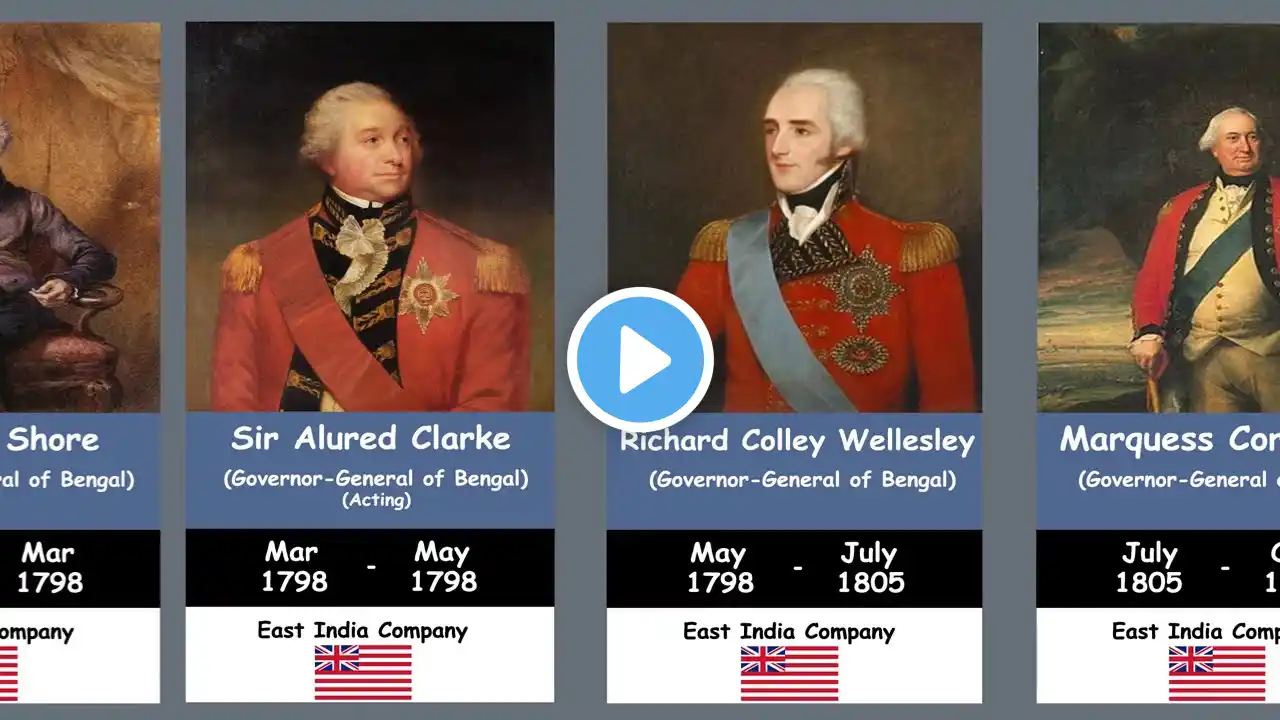
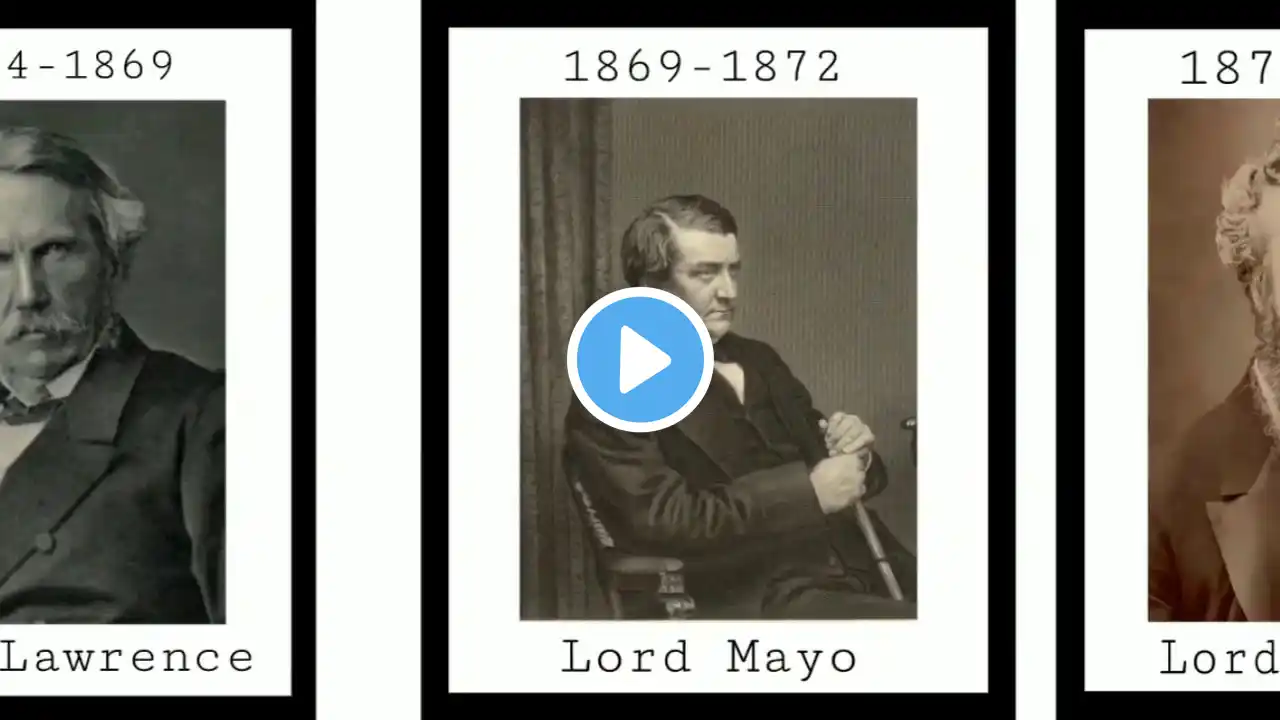
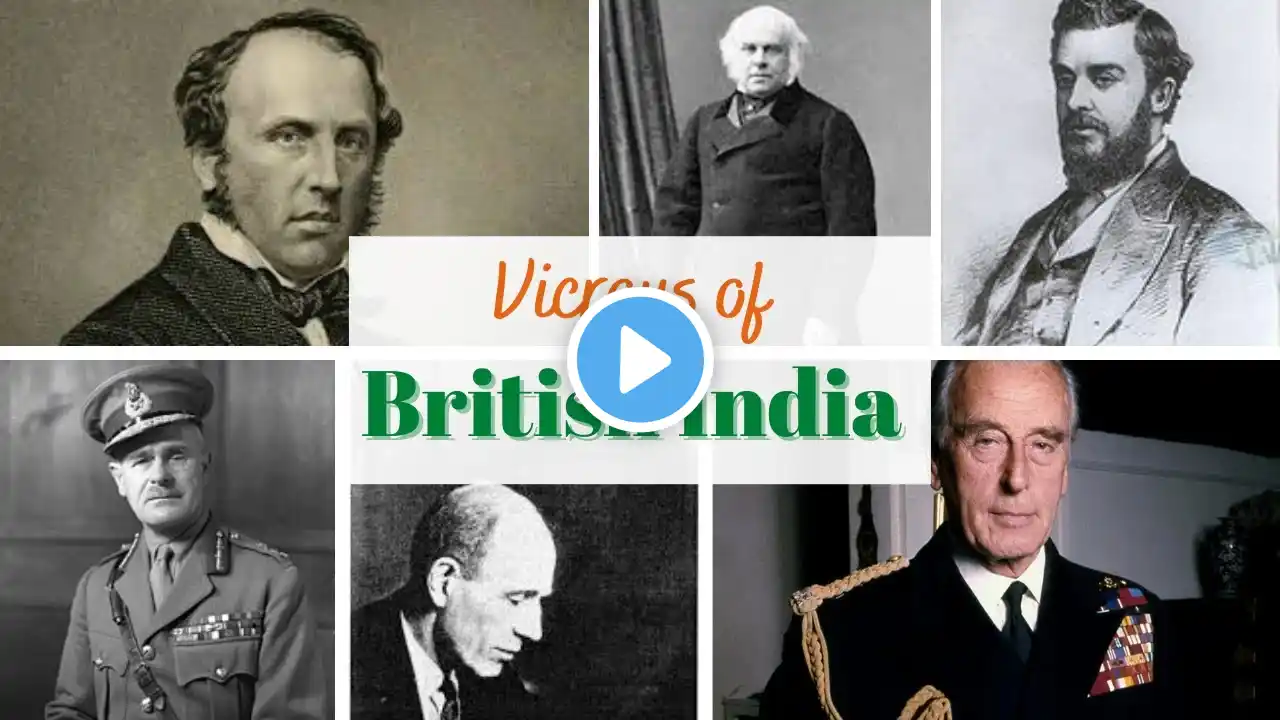
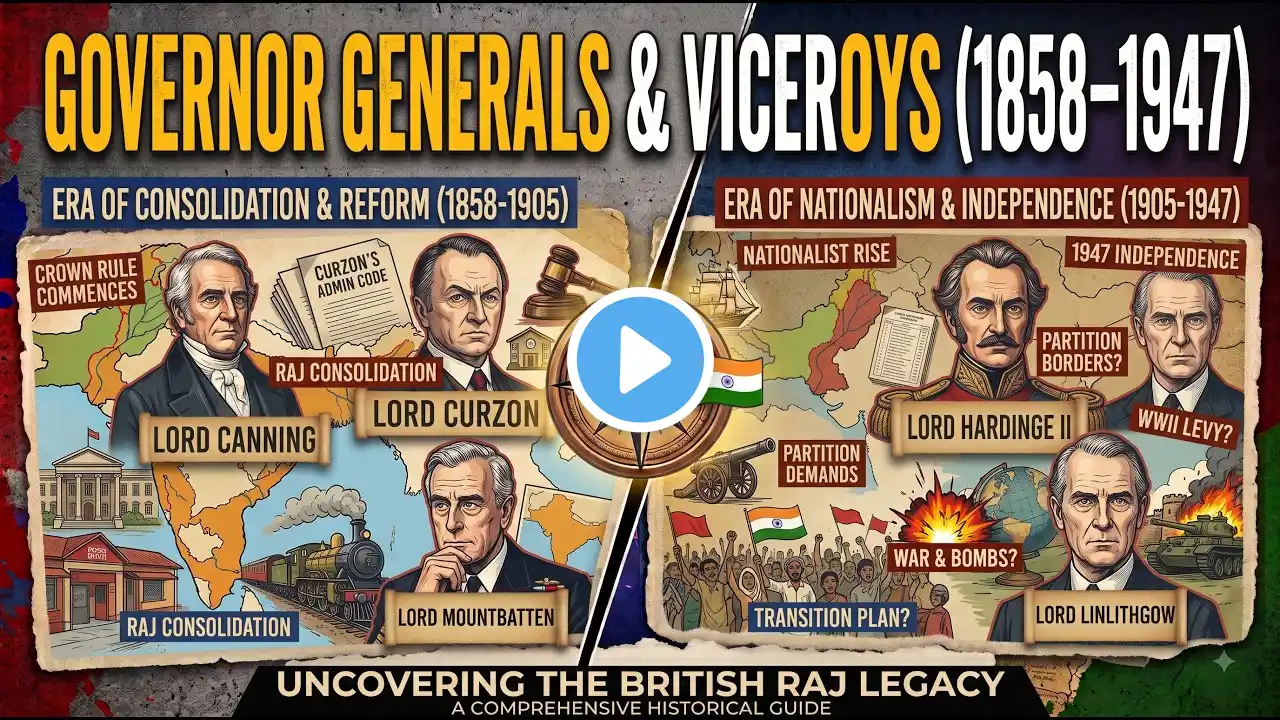
How many Viceroy's of India of British East India Company 1857 to 1947.
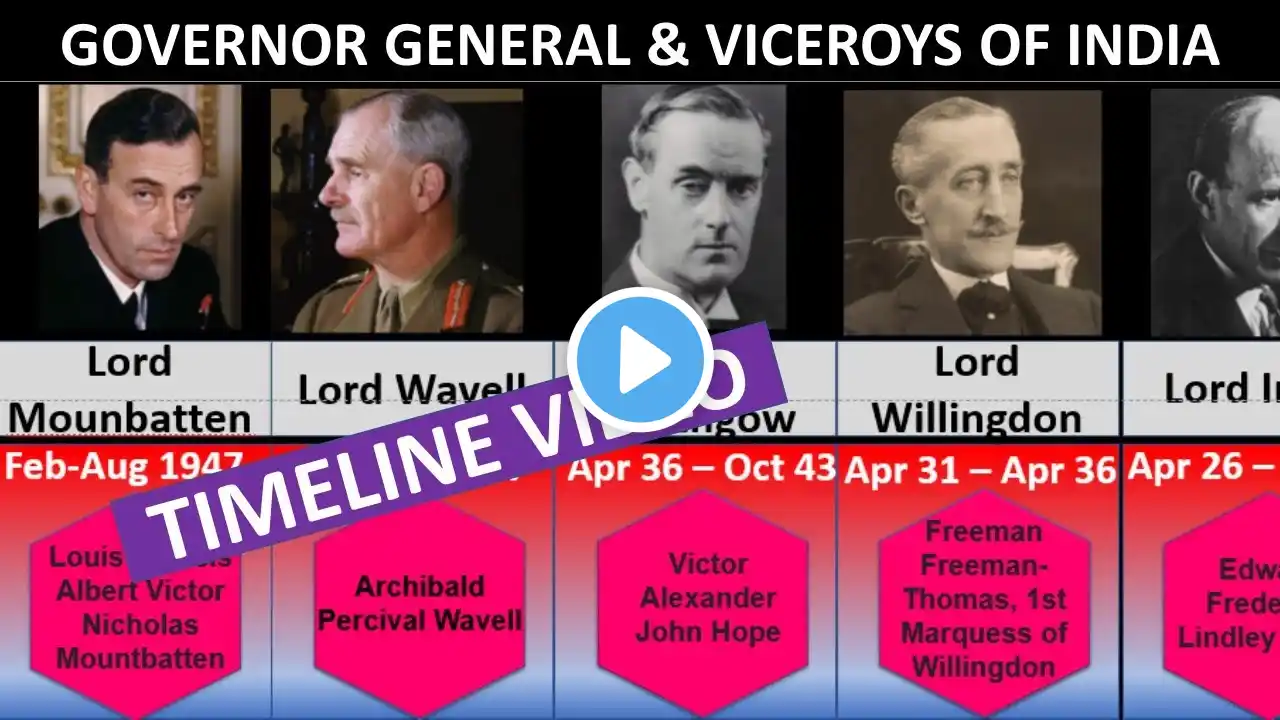
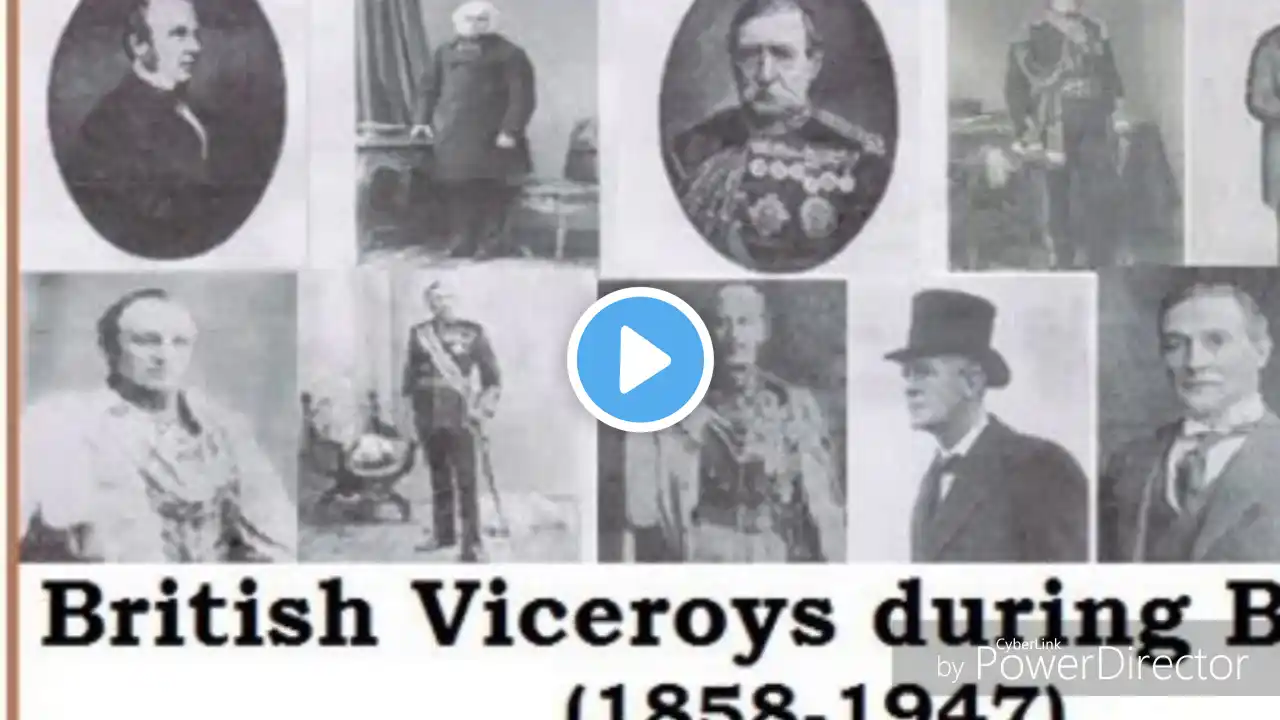
A Viceroy of India was the British monarch's representative ruling British India, a title used for Governor-Generals after the Government of India Act 1858, with Lord Canning as the first and Lord Mountbatten as the last, overseeing crucial events like the Partition and Independence in 1947. Key Viceroys included Lord Curzon (Partition of Bengal), Lord Irwin (Gandhi-Irwin Pact), and Lord Linlithgow (Quit India Movement), each managing significant political and social changes. Key Viceroys & Their Eras Lord Canning (1858-1862): First Viceroy, introduced Imperial Civil Service exams, dealt with the aftermath of the 1857 Rebellion. Lord Lytton (1876-1880): Implemented the Vernacular Press Act & Arms Act, ignored famine, held the Delhi Durbar for Queen Victoria's Empress title. Lord Dufferin (1884-1888): Formation of the Indian National Congress occurred during his tenure. Lord Curzon (1899-1905): Partitioned Bengal, strengthened the Archaeological Survey. Lord Minto II (1905-1910): Introduced Morley-Minto Reforms, creating separate electorates for Muslims. Lord Hardinge II (1910-1916): Shifted the capital from Calcutta to Delhi, annulled the Partition of Bengal. Lord Chelmsford (1916-1921): Saw the Rowlatt Act, Jallianwala Bagh Massacre, and Montagu-Chelmsford Reforms. Lord Irwin (1926-1931): Signed the Gandhi-Irwin Pact, hosted the First Round Table Conference. Lord Linlithgow (1936-1944): Presided over the Quit India Movement and World War II's impact. Lord Wavell (1944-1947): Proposed the Wavell Plan, handled the Cabinet Mission. Lord Mountbatten (1947): Last Viceroy, oversaw India's independence and partition. #viceroys #eastindiacompany #partition #educationalvideo #historyfacts