Edward Said & His Thoughts: Orientalism, Power is Knowledge | Sociology
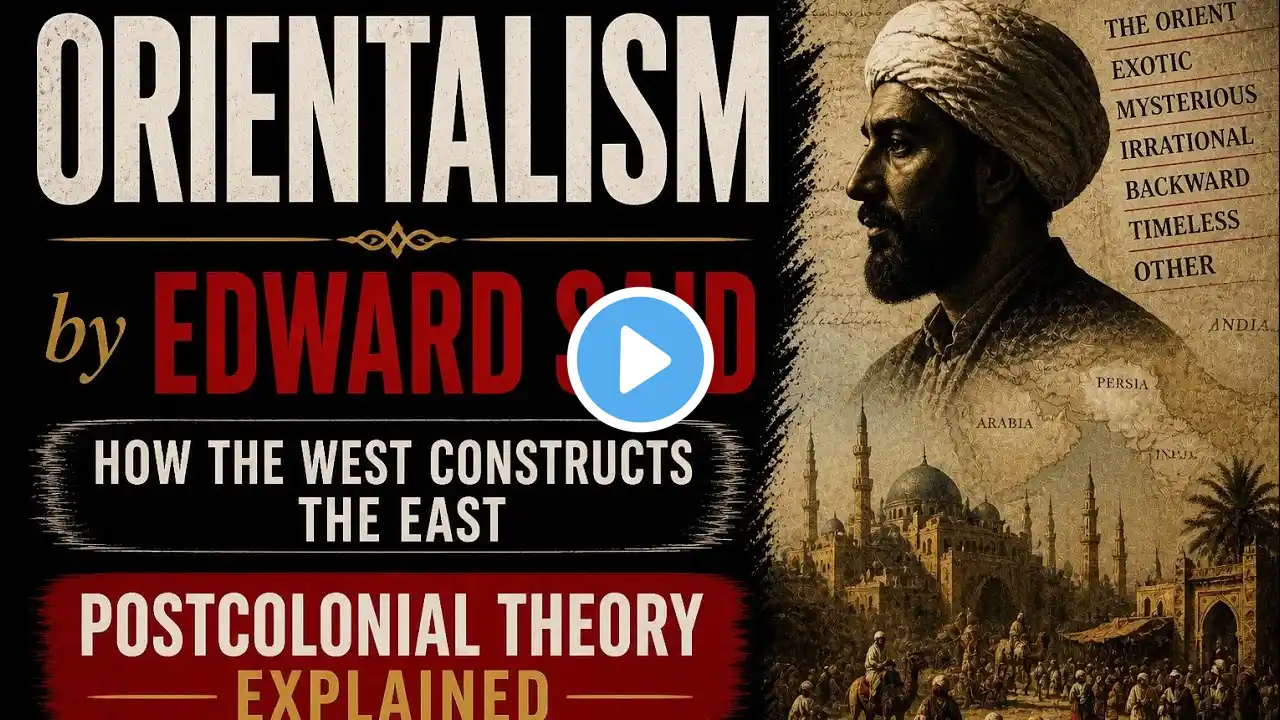
NTA NET Sociology - https://www.doorsteptutor.com/Exams/U... IAS Mains Sociology - https://www.doorsteptutor.com/Exams/I... GATE Sociology - https://www.doorsteptutor.com/Exams/G... NTA NET Paper 1 Online Crash Course - https://www.doorsteptutor.com/Exams/U... NTA NET Paper 1 Mock papers - https://www.doorsteptutor.com/Exams/U... NTA NET Paper 1 Practice questions - https://www.doorsteptutor.com/Exams/U... NTA NET Paper 1 Postal Course - https://www.examrace.com/NTA-UGC-NET/... NCERT, Yojana, Kurukshetra, Down to Earth, Science, Social Studies and More interesting topics subscribe at Examrace: / examrace NCERT, Yojana, Kurukshetra, Down to Earth, Science, Social Studies and More interesting topics subscribe at ExamraceHindi: / examracehindi For classes nursery to class 5 videos subscribe to FunProf: / funprof For Science Class 11-12 and important topics subscribe to DoorStepTutor: / doorsteptutor About Edward Said A post-colonial scholar. Born- 1st November, 1935. He was a cultural critique based on orientalism. In his book Beginnings: Intention and Method (1975), Said sought to draw a distinction between the mythical or divine attribution associated with the notion of ‘origin’ in classical thought (which carries with it implications of order, chronology and hierarchy) and the human and secular realm of ‘beginning’ (a word which has associations with modernity, and implies an overturning of classical hierarchy, and its replacement with heterogeneous and disparate forms). Orientalism as Discourse Said is best known for his work on Orientalism, in which he describes Orientalism as a) a system of representation of the East/Orient; b) a repertoire of images and attitudes and ways of seeing consisting of recurrent stereotypes within Orientalist writing in the West But there are also contradictions in that representation--East: both attractive and repulsive Some characteristics of Orientalism An irreconcilable difference between East and West (the myth of the “clash of civilizations” after the end of the Cold War); An unchanging Orient, static, free from history, primitive and barbaric; “living tableau of queerness”--voluptuous women, snake-charmers, world of ease and languor, wine and song; but also despotism, perversions, dangers, women locked up in harems; Lack of sense of law; irrational; Unchanging essence: the Arab mind; the Islamic worldview; the opposite of modern Power is Knowledge Orientalism as discourse then helps create the conditions or participates in the domination of the Orient by the West Creation of a general interest and fascination for the Orient—a field of vision, a way of seeing and looking at the Orient “The scope of Orientalism exactly matched the scope of empire”. The Orient/East became the object of knowledge, silent and passive, and the West became the realm of the subject, of the knower/ representator. Representation is thus ultimately about power in society—who gets to represent whom and how and why and from where. Is Orientalism racist? Historical, cultural and racial generalizations Emphasis on the past, on the classical period, not on the living character Denies the Orient any history; denies its presence, except as a fall Crucially, this power of representation is asymmetrical. Practice Set Who gave the concept of ‘Orientalism’? Arnold Green B. Edward Said C. Karl Popper D. Malinowski 2. Edward Said’s work ‘Beginings: Invention and Methods was published in the year- 1973 B. 1974 C. 1975 D. 1976 3. In the discourse of ‘Orientalism’ what is power? A. Authority B. Numerical Dominance C. Status D. Knowledge THANK YOU CHAPTER 00:00 Edward Said & His Thoughts 00:07 About Edward Said 01:06 Orientalism As Discourse 02:11 Some Characteristics Of Orientalism 04:37 Power Is Knowledge 04:43 Is Orientalism Racist 06:29 Lets Practice #ugcnet #doorsteptutor #examrace