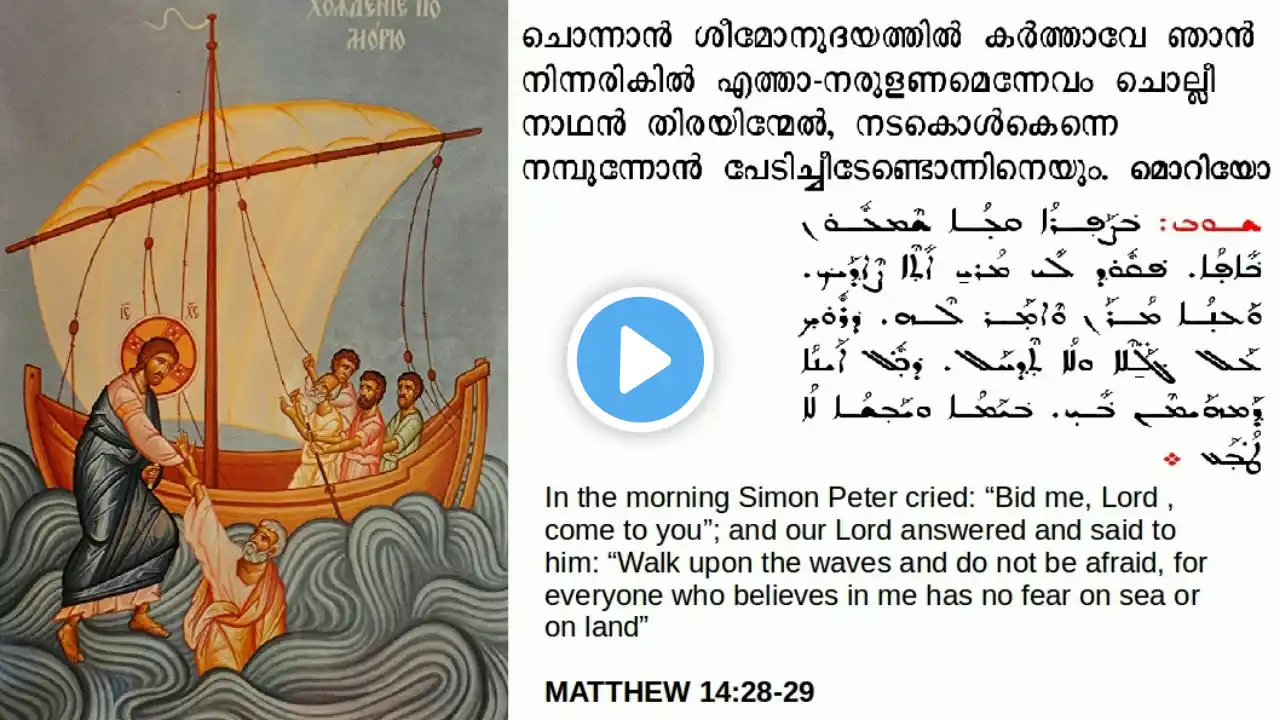
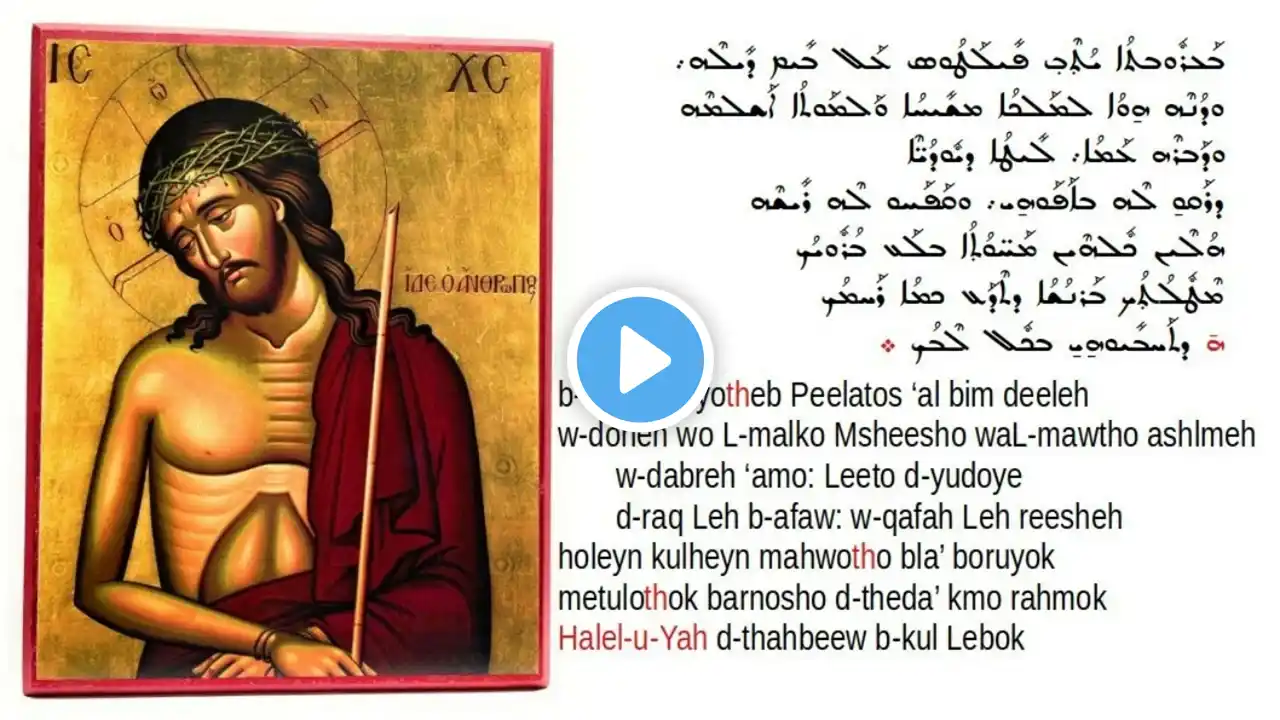
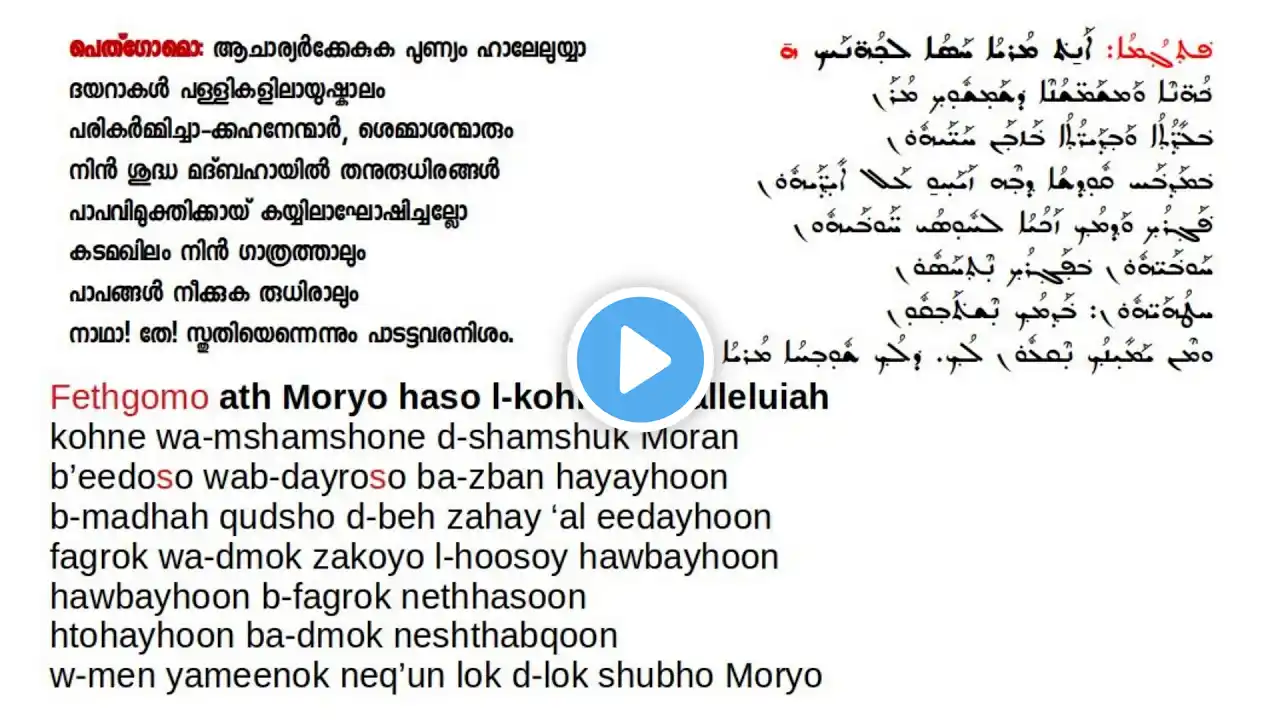
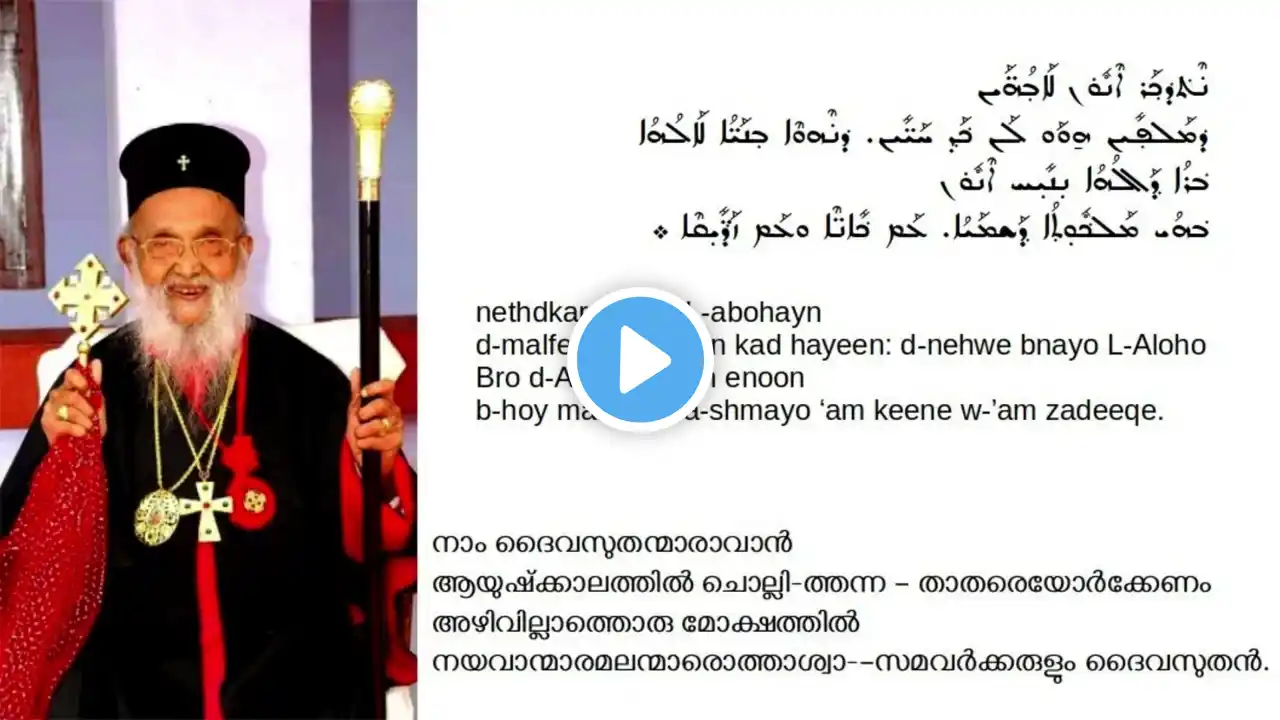
First 3 stanzas and last stanza of the Qolo of Safro (Morning) from the Shimo of Monday
These are the first 3 stanzas and the last from the Qolo from the Safro (Morning) prayers of Monday from the Shimo. The more well known stanza of this Qolo is: "വെളിവ് നിറഞ്ഞോരീശോ ". This is also used as one of the hymns that can be chanted during the tuyobo (preparatory prayers) before the Holy Qurbana. The last stanza 2:20 of this Qolo ('bed Mor dukrono 2:57) is probably one of the few stanzas from the entire Shimo that every layman in Malankara can recite from memory in Syriac. I have heard a very interesting question about the last stanza of this Qolo. The question is this: When we sing "മരിച്ചോര്-ക്കരുളണമേ, നല്ലോര്മ്മ" (grant good remembrance to the departed); what do we mean ? Are we praying that the departed souls may not have dementia and remember everything? Or are we praying that we not have dementia and we be given good memory to remember our departed always? We can best approach the meaning of this stanza through following the connection to the crucifixion of Christ. What did the "wise thief" (the thief crucified on the right side of Christ) ask for on the cross? As we read in St. Luke’s Gospel, the thief asked: “Lord, remember me when Thou comest in Thy kingdom” And in answer, in satisfaction of his wish, his wish to be remembered, the Lord witnesses: “Verily, I say unto thee, Today shalt thou be with me in Paradise.” In other words, “to be remembered” by the Lord is the same thing as “to be in Paradise.” “To be in Paradise” is to be in eternal memory and, consequently, to have eternal existence and therefore an eternal memory of God. Without remembrance of God we die, but our remembrance of God is possible only through God’s remembrance of us. This is what we mean by singing.. "മരിച്ചോര്-ക്കരുളണമേ, നല്ലോര്മ്മ" (grant good remembrance to the departed). -- This Qolo was first translated into Malayalam and published in 1902. Most of the translation work was done by Parumala Thirumni before he passed away. After he passed away two of his disciples Konatt Mathen Malpan and Vattasseril Geevarghese Malpan took it on and completed the work and published it in 1902.